

Egypt, UNIDO host workshop on carbon border tax impact on exports
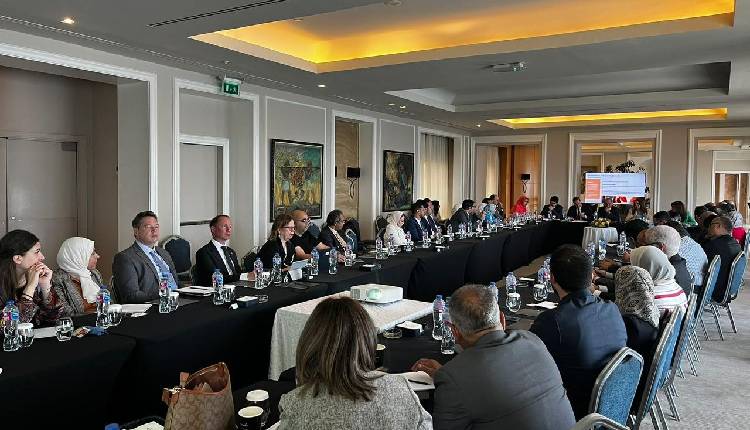
Egypt’s Foreign Ministry and the United Nations Industrial Development Organization (UNIDO) co-hosted this week a workshop to discuss the implications of cross-border carbon adjustment mechanisms (BCAs) on Egyptian exports, particularly in light of the EU’s new Carbon Border Adjustment Mechanism (CBAM).
The workshop brought together international experts from the World Bank, UNIDO, and Massachusetts Institute of Technology (MIT), as well as key Egyptian stakeholders including the Federation of Egyptian Industries, Cairo University, and officials from various ministries, the Egyptian Exchange, banks, and heavy industry.
According to a statement by the Egyptian Cabinet on Wednesday, the sessions aimed to foster dialogue on how Egypt can navigate the transition phase of the EU’s CBAM, which will impose carbon pricing on imported goods based on their emissions footprint. Participants explored ways to mitigate the policy’s impact on Egyptian exports and ensure industrial competitiveness.
Five panel discussions addressed the global context of CBAM, the challenges for exporters, carbon reduction strategies in industry, and the role of finance and technology transfer. Speakers emphasised the urgency of aligning Egypt’s trade and climate strategies to safeguard economic interests.
UNIDO noted that 73 per cent of its Egypt portfolio is climate-focused, and participants called for stronger public-private coordination to ensure a fair transition amid increasing climate-related trade measures.
Attribution: Amwal Al Ghad English
Subediting: Y.Yasser