

Egypt unearths new complete Canopus Decree stele, largest find in 150 years
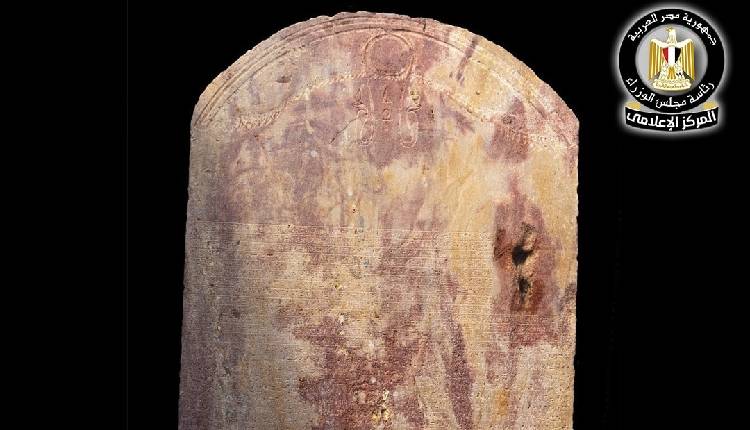
Egypt’s Supreme Council of Antiquities said on Wednesday that its mission at Tell el-Pharaoh in Husseiniya, Sharqia Governorate, had unearthed a sandstone stele representing a new copy of the Canopus Decree, issued by King Ptolemy III in 283 BC.
The discovery is the largest of its kind in more than 150 years, as no complete new copy of the decree had been found since then. The newly found stele brings the total number of known copies to seven, supplementing six previously discovered in Kom el-Hisn, San el-Hagar, and Tell Basta, some of which were incomplete.
Unlike earlier trilingual versions written in hieroglyphs, Demotic, and Greek, the new stele is inscribed entirely in hieroglyphs. Archaeologists said the find could provide fresh insights into ancient Egyptian language, royal decrees, and religious ceremonies during the Ptolemaic era.
Measuring 127.5 cm tall, 83 cm wide, and approximately 48 cm thick, the stele features a rounded top adorned with a winged solar disc flanked by two royal cobras wearing the white and red crowns, with the inscription “di-ankh” (“given life”) between them. Its central section contains 30 lines of hieroglyphic text carved with medium-quality workmanship.
The inscriptions record the deeds of King Ptolemy III and his wife Berenice, referred to as the “beneficent gods,” including temple donations, maintenance of internal peace, tax reductions during low Nile floods, and other measures. The decree also specified that such stelae be inscribed in hieroglyphs, Demotic, and Greek and displayed in major temples.
Subediting: Y.Yasser