

Egyptian central bank, agriculture ministry review smallholder farmers project in Aswan
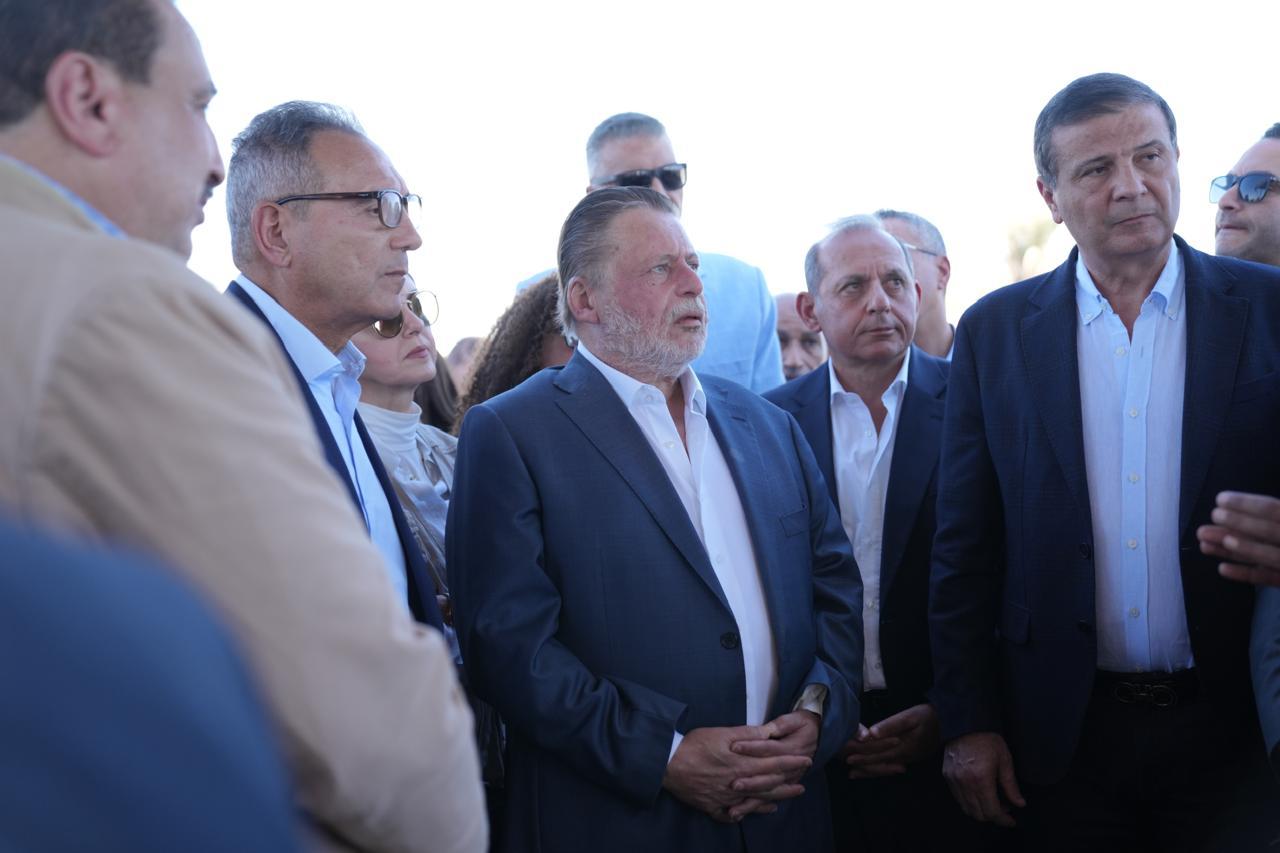
Central Bank of Egypt (CBE) Governor Hassan Abdalla and Agriculture Minister Alaa Farouk visited villages in Aswan on Sunday to review progress on the Transforming the Livelihoods of Smallholder Farmers Project. The project integrates farmers into the formal financial system and promotes sustainable agricultural development.
Launched jointly by the CBE, the banking sector, the Ministry of Agriculture, and the UN’s World Food Programme (WFP), the project targets improved economic and social livelihoods through modern farming techniques, women’s economic empowerment, and financial literacy. The visit included Aswan Governor Ismail Kamal and WFP Country Director Rawad Halabi.
During the tour, Abdalla and Farouk inspected a solar-powered irrigation station in Armana village and a sugarcane seedling cultivation model using solar-powered drip irrigation in Eniba village. They also met farmers and women beneficiaries, toured productive enterprises, and reviewed training programmes, provision of agricultural inputs, and other on-ground support designed to boost productivity and rural household income.
Abdalla praised the project’s impact, noting that it reflects effective coordination among state institutions, the banking sector, and international partners. He said the initiative aligns with Egypt’s strategy to support smallholder farmers, promote financial inclusion, and optimise land and water use, with a special focus on Upper Egypt and underprivileged areas.
Farouk highlighted the ministry’s role in providing technical support, improved seeds, mechanisation, and modern advisory services, emphasising the Executive Agency for Comprehensive Development Projects (EACDP) as the implementing body to ensure assistance reaches eligible farmers. He noted that financing from banks enables farmers to purchase production inputs, supporting long-term rural development.
Halabi described the initiative as a “pivotal milestone in sustainable development,” highlighting its blended finance model and catalytic capital tools, which aim to empower farmers economically and enhance food security, in line with Egypt’s Vision 2030.
The first phase of the project, conducted from January 2021 to June 2022, benefited around 85,000 smallholder farmers, consolidated 8,500 feddans of land, and introduced modern irrigation techniques and solar panels. It also increased crop production by 34 per cent and revenues by 35 per cent and reduced operational costs by 37.5 per cent. Women represented a significant share of participants, receiving support to establish livestock projects and access financial literacy programs.
The second phase, launched in January 2025 and running through December 2026 with nearly 120 million Egyptian pounds in funding, targets 11 new villages, cultivates sugarcane and export-oriented crops such as cantaloupe, develops 400 feddans of land, and installs 21 solar power stations with nearly 1,000 kilowatts of capacity, supporting around 23,500 beneficiaries.
Attribution: Amwal Al Ghad English