

Egypt’s Sisi sends message to Putin as Cairo seeks stability, strategic partnerships
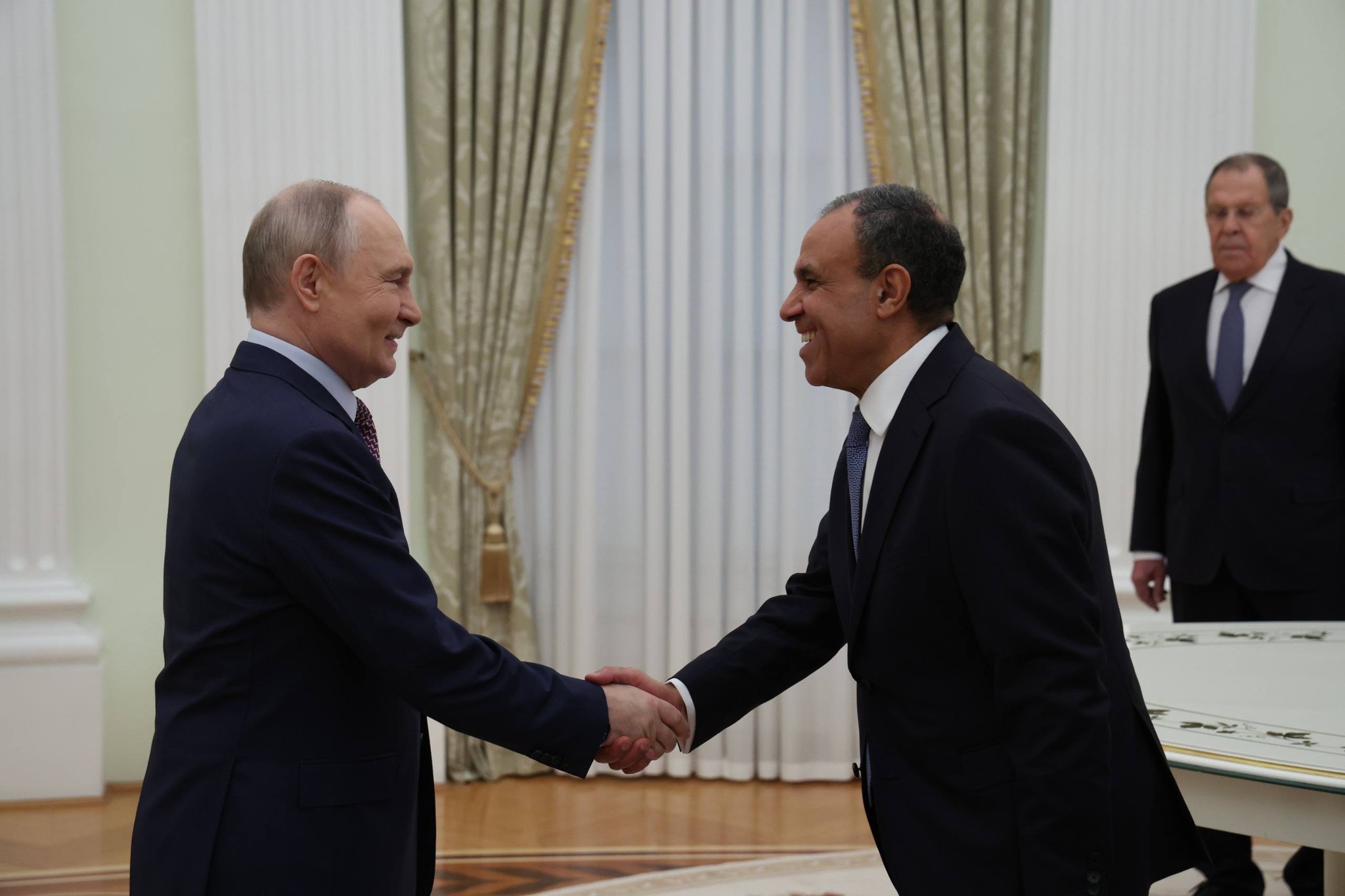
Egypt delivered a message from President Abdel Fattah El-Sisi to Russian President Vladimir Putin on Thursday, underscoring Cairo’s push to deepen strategic and economic ties with Moscow amid rising Middle East tensions.
Foreign Minister Badr Abdel-Atty met Putin to discuss expanding bilateral cooperation and coordinating positions on key international and regional issues, according to Egypt’s Foreign Ministry. Abdel-Atty handed over a written message outlining ways to strengthen coordination between the two countries.
Putin praised the depth of Egyptian-Russian relations and Egypt’s role in promoting regional stability, asking that his greetings be conveyed to Sisi.
Energy and infrastructure projects were central to the talks. Abdel-Atty reaffirmed Egypt’s commitment to completing the El-Dabaa Nuclear Power Plant, constructed with Russian support. He also highlighted plans for a Russian industrial zone in the Suez Canal Economic Zone (SCZONE), and said upcoming meetings between the SCZONE Authority and Russia’s Ministry of Industry and Trade are expected to finalise financing and implementation arrangements.
Economic ties were also a central focus, particularly Egypt’s continued imports of Russian wheat and other food commodities. Abdel-Atty signalled Cairo’s interest in maintaining those flows and in exploring Russian participation in a planned grain logistics hub, a project aimed at strengthening food security.
The ministers also addressed regional crises. Abdel-Atty outlined Egypt’s efforts to ease tensions in Gaza, including proposals for an international stabilisation force and support for the Palestinian Authority’s governance, and condemned Israeli settlement expansion in West Bank and new death penalty legislation targeting Palestinians.
Libya and Ukraine were also discussed, with Egypt reiterating support for a unified Libyan state and peaceful resolution of the conflict in Ukraine.
“The escalation of conflicts could disrupt shipping, strain supply chains, and worsen food and energy security,” Abdel-Atty said.
The meeting reflects Egypt’s strategy of maintaining ties with major global powers while positioning itself as a stabilising force in an increasingly volatile region.
Attribution: Amwal Al Ghad English