

LaunchPad Expo: Business leaders say visibility is key to scaling successfully
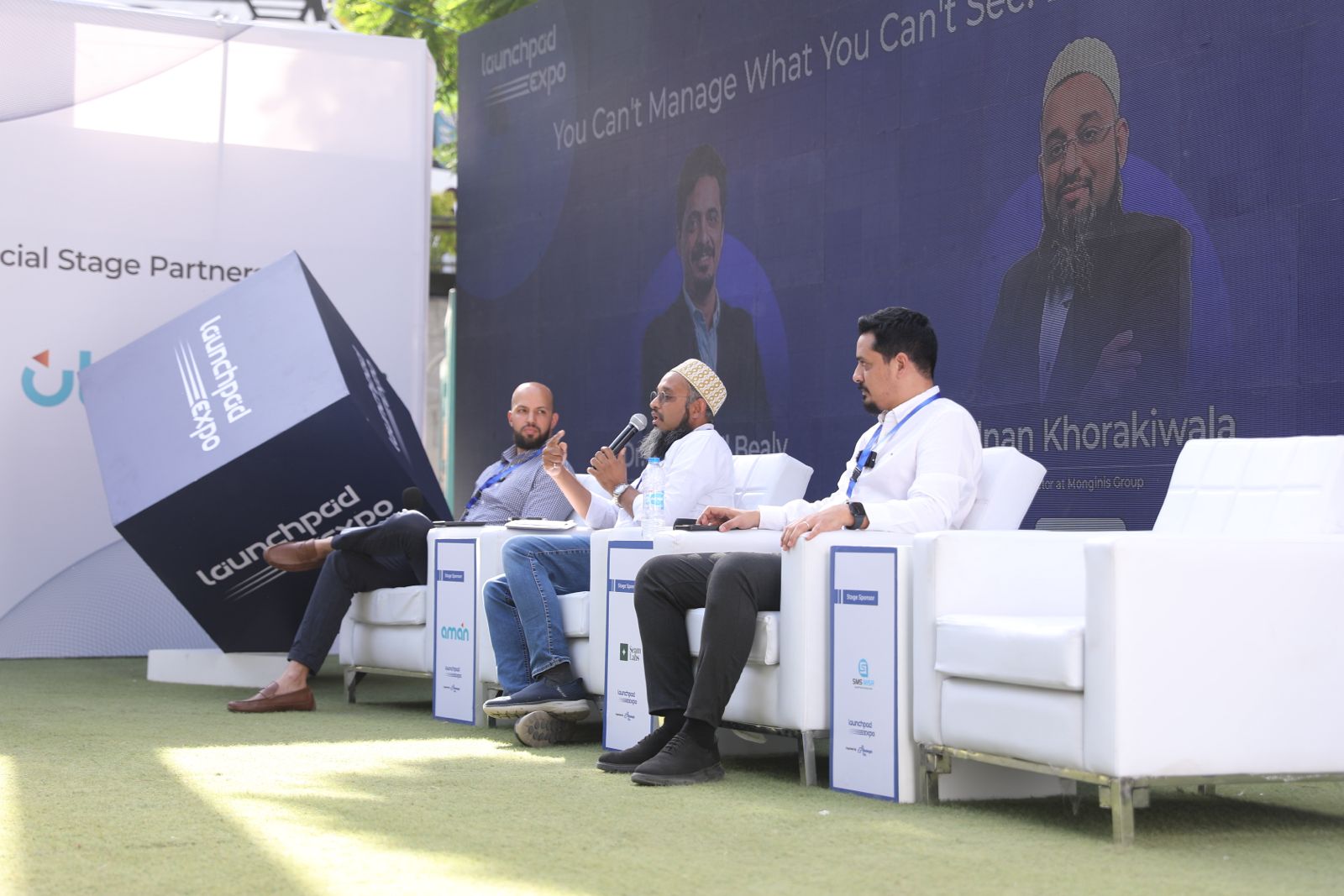
Businesses that rely solely on intuition and informal management structures risk limiting their long-term growth, speakers said during the third session of LaunchPad held on Friday at The Greek Campus.
The session, titled “You Can’t Manage What You Can’t See: Building Operations You Can Actually Trust,” featured Adnan Khorakiwala, Director at Monginis Group, and Khaled El Bealy, Chief Commercial Officer at Mawared. The discussion was moderated by Yassin Omar, Partner at Mawared HR.
The panel focused on the importance of operational visibility, data-driven decision-making, and scalable systems as companies expand.
Khorakiwala said Egyptian entrepreneurs are known for their ability to solve problems quickly and adapt under pressure, describing it as a “superpower” that allows businesses to survive challenging market conditions.
However, he warned that relying solely on improvisation and informal communication channels — such as WhatsApp groups and founder-led decision-making — can eventually become an obstacle to growth.
“Trust alone is not enough. There must be visibility,” Khorakiwala said, stressing the importance of monitoring operations closely before small issues escalate into larger business problems.
He noted that many founders mistakenly believe that implementing technology or collecting large amounts of data automatically improves performance. Instead, he argued that data should serve as a tool for making informed operational decisions.
“Technology is not a magic solution,” he said, comparing business systems to a luxury car that still requires a trained driver who understands how to use its full capabilities.
Khaled El Bealy said many companies face a major gap between data collection and its effective use to improve operations and accelerate decision-making.
He explained that businesses often treat operational systems only as administrative tools, such as processing payroll or attendance tracking, while overlooking their broader strategic value.
El Bealy provided examples of how real-time operational data can help companies identify staffing shortages, monitor employee attendance, manage overlapping leave requests, and respond quickly to operational disruptions across different branches or departments.
“The right data at the right time allows companies to solve problems before they become crises,” he said.
The discussion also highlighted how different business models require different operational insights. Companies with field operations, office teams, or fast-moving service models may each require customised reporting systems and dashboards to support decision-making.
Speakers said businesses that delay addressing operational inefficiencies often face more complex challenges later as unresolved problems accumulate over time.
Khorakiwala also warned against overdependence on individuals rather than institutional systems, noting that many founders realise too late that key operational knowledge exists only in employees’ minds rather than within documented company processes.
He said businesses frequently struggle when experienced employees resign because critical operational practices were never properly documented or integrated into scalable systems.
The panel emphasised that successful scaling requires businesses to grow their internal systems and processes alongside revenue and headcount growth.
Speakers also noted that operational conflicts between departments often arise when teams rely on different sets of information and metrics. They said unified dashboards and shared business insights can help leadership teams align around common objectives and make more coordinated decisions.
The session concluded with a call for founders to invest early in operational systems, process management, and transparent reporting structures to improve scalability, accountability, and long-term business sustainability.
Attribution: Amwal Al Ghad English