

Egypt, Libya sign petroleum, gas, mining cooperation deal
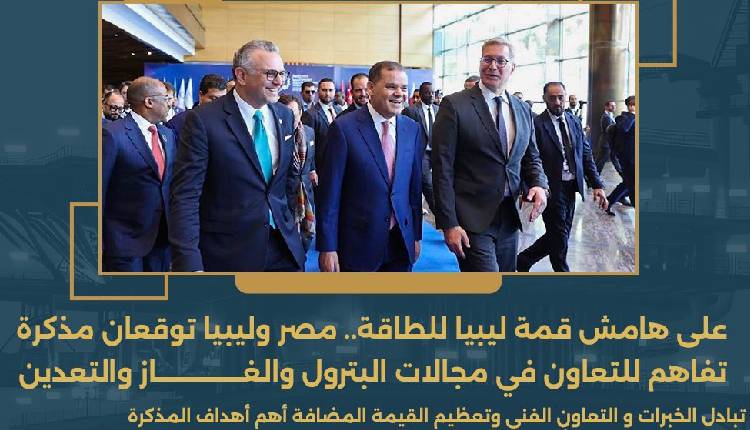
Egypt and Libya have signed a memorandum of understanding to expand cooperation in petroleum, natural gas and mining, signalling a new phase in bilateral energy ties, Egypt’s Ministry of Petroleum said on Saturday.
The agreement was signed on the sidelines of the Libya Energy and Economic Summit, held in Tripoli from 24 to 26 Jan.
The signing ceremony was attended by Libyan Prime Minister Abdul Hamid Dbeibeh, Egypt’s Minister of Petroleum and Mineral Resources Karim Badawy, and Libya’s Minister of Oil and Gas Khalifa Rajab Abdulsadek.
The MoU was signed by Waleed Lotfy, chairman of Egyptian engineering firm Petrojet, and Masoud Suleiman, chairman of Libya’s National Oil Corporation.
Under the agreement, the two countries will cooperate across oil and gas exploration and production, crude oil refining aimed at maximising value added and upgrading refineries, and potential projects to transport crude oil and natural gas between Egypt and Libya.
The pact also covers the exchange of technical expertise, measures to improve production efficiency, the development of petrochemical industries, training programmes, and enhanced cooperation in mining, particularly mineral exploration. The ministry said the agreement aligns with Egypt’s ambition to strengthen its role as a regional hub for energy trading.
Badawy also took part in the opening session of the summit, where he said the energy sector is a key driver of economic growth, supporting industries such as petrochemicals, mining, manufacturing and power generation.
He outlined Egypt’s energy strategy, which focuses on increasing oil and gas production to meet domestic demand, maximising returns from existing infrastructure and refining capacity, expanding the mining sector’s contribution to GDP, and coordinating with the electricity sector to achieve a more balanced energy mix with greater reliance on renewable and green energy.
Badawy said Egypt’s extensive energy infrastructure underpins its regional role, citing its gas liquefaction facilities as a competitive advantage and noting that the country ranks second in Africa in petroleum refining capacity, at about 40 million tons per year.
Attribution: Amwal Al Ghad English