

Egypt reviews industrial development strategy with World Bank
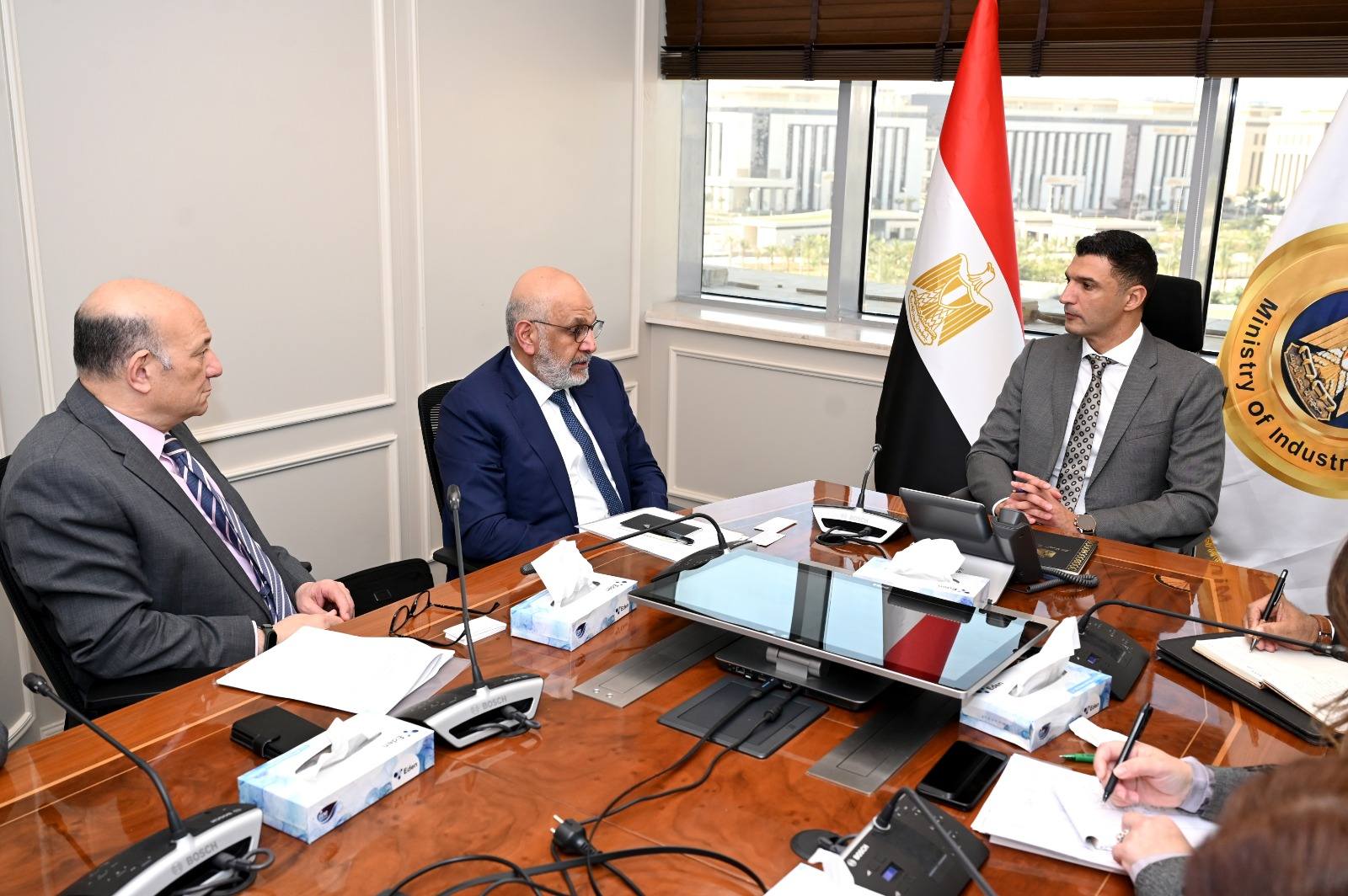
Egypt’s Ministry of Industry is seeking closer cooperation with the World Bank to accelerate industrial development, enhance infrastructure in industrial zones, and improve workforce training, Minister Khaled Hashem said on Thursday.
Hashem met with Abdulaziz Al Mulla, Executive Director for the Arab Countries Group at the World Bank, and Hisham Seifeldin, Alternate Executive Director for the World Bank, to discuss support for industrial policy, investment promotion, and the expansion of industrial zones.
The ministry is reviewing Egypt’s national industrial strategy in light of recent global developments, including rising US tariffs, and aims to identify five key industries and five supporting sectors for priority development. Hashem said the ministry would rely on the World Bank for accurate data on industrial technologies, investment trends, and workforce skills.
Plans include creating detailed industrial maps to match strategic industries with land availability in each governorate, alongside strong incentive packages for investors.
“The ministry will actively promote investment, rather than wait for investors to come to us,” Hashem said, emphasising a proactive approach to industrial development.
He added that ministry also intends to link research and development with industry, establishing technology clusters at universities and research centres, and creating a national database of industrial innovations to help convert scientific research into economic applications.
Hashem highlighted the importance of workforce development, including training in modern technologies, digitalisation, and artificial intelligence, in collaboration with local and international institutions. The ministry is also exploring new financing mechanisms, including citizen-participation industrial investment funds, and promoting “productive villages” to encourage local manufacturing outside major urban centres.
The ministry is focused on initiatives such as the National Programme for Developing the Automotive Industry, which aims to deepen local manufacturing and reduce reliance on vehicle assembly, while targeting a doubling of Egyptian exports by 2030.
Al Mulla said the World Bank’s Arab Countries Group, which represents Arab nations on the Bank’s Board, is committed to supporting Egypt in workforce training and expanding employment opportunities in industry.
Attribution: Amwal Al Ghad English