

Egypt’s CBE, EU unveil ESCB Programme extension to 2027 to boost Africa’s financial stability
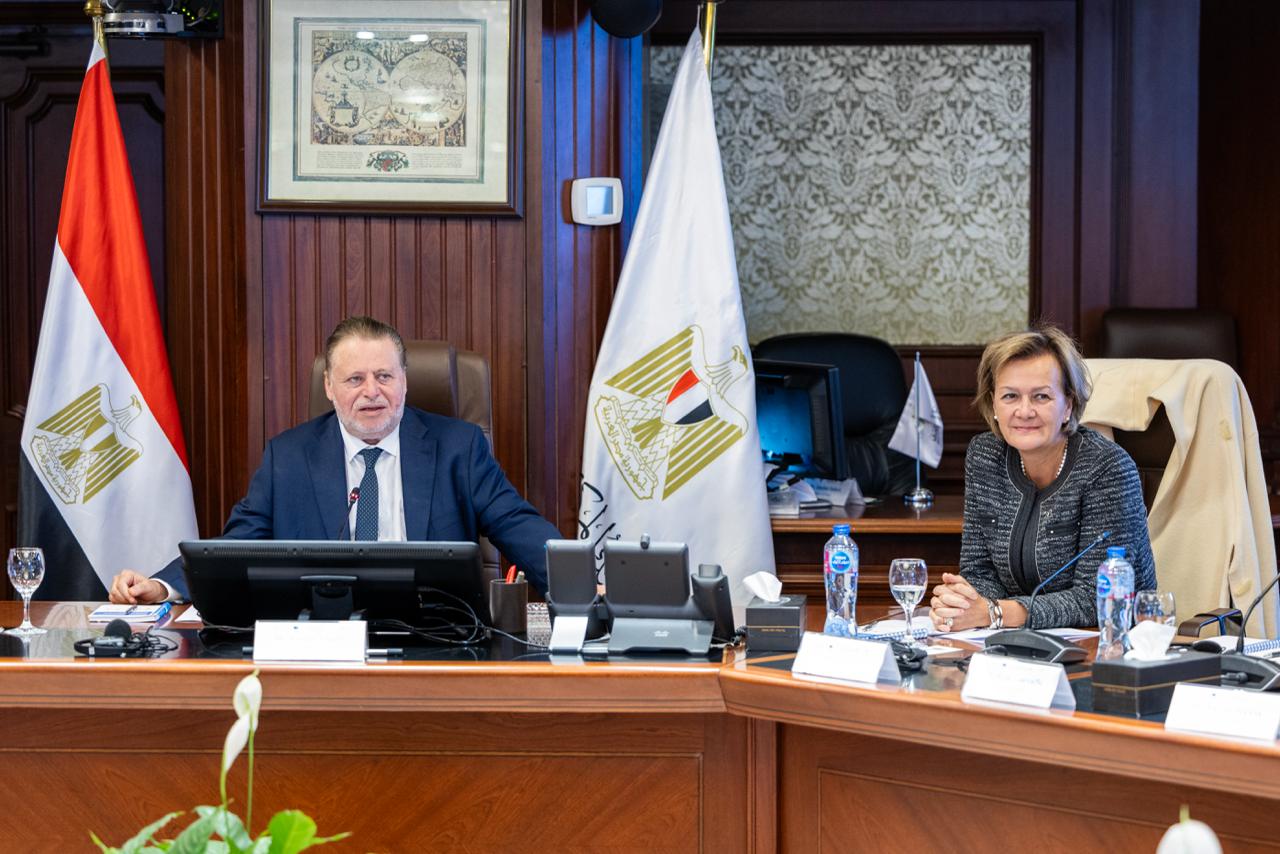
The Central Bank of Egypt (CBE) and the European Union (EU) announced the extension of the EU-funded programme of the European System of Central Banks (ESCB) to contribute to macroeconomic and financial stability in Africa.
Launched in December 2023, the programme will now continue until December 2027, the CBE said in a statement on Wednesday.
It is implemented by the Deutsche Bundesbank and the Banque de France, in partnership with the Nationale Bank van België/Banque Nationale de Belgique, the Banco de España, the Banca d’Italia, Lietuvos Bankas, the Banco de Portugal, and the Národná Banka Slovenska. The European Central Bank (ECB) is also contributing to its implementation.
The extension will see an additional budget of €2 million, Deutsche Bundesbank said in a statement on Tuesday.
The extension of the project was announced during the inauguration of 9th Programme Steering Committee meeting, which was hosted by the CBE in Cairo on Tuesday, and was attended by CBE Governor Hassan Abdalla and EU Ambassador to Egypt Angelina Eichhorst.
The ESCB programme covers issues such as climate change, digitalisation, artificial intelligence, governance, and anti-money laundering. It is the first of its kind to adopt a multilateral approach to promote regional cooperation, creating a peer-to-peer platform between European and African central banks. The initiative facilitates knowledge and resource sharing, supports reforms, and enhances financial resilience to promote trade, investment, and growth.
The programme benefits the central banks across 24 African countries, including: the CBE, the National Bank of Angola, the Central Bank of West African States (BCEAO), the Bank of Central African States (BEAC), Bank of Ghana, the Central Bank of Kenya, the Central Bank of Morocco, Bank of Mozambique, Bank of Namibia, the South African Reserve Bank, Bank of Tanzania, and the Central Bank of Tunisia. It provides training, technical support, and knowledge exchange to strengthen financial resilience and support multilateral trade and investment.
Abdalla said the programme has demonstrated the value of peer-to-peer collaboration between African and European central banks. It has also contributed to achieving positive outcomes for African central banks, including capacity development, knowledge exchange, and supporting reforms to address global economic challenges, he noted.
Abdalla added that the extension will expand technical support, strengthen capacity building, and reinforce policies that support financial stability, transparency, and sustainable growth.
The event hosted by the CBE, is part of the ESCB Project, Dubbed Strengthening Financial Stability, Resilience, and Governance – Towards an Enhanced European System of Central Banks (ESCB) Dialogue with Africa, this EU regional initiative aims to support African central banks through capacity building.
Attribution: Amwal Al Ghad English