

Global markets retreat on Tuesday
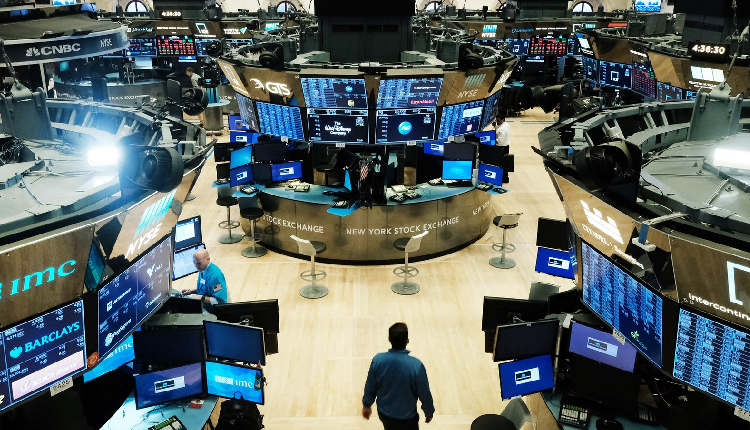
Global markets retreated on Tuesday as US President Donald Trump intensified pressure on Europe over Greenland, reviving fears of a renewed “Sell America” trade that weighed on equities and the dollar while pushing bond yields higher.
US stock futures fell sharply, with Nasdaq and S&P 500 futures down more than 1 per cent, while the dollar weakened for a second straight session. The yield on the 10 year US Treasury rose to 4.265 per cent, its highest level in four months, as investors sold US assets amid fresh tariff threats against European nations if talks on Greenland fail.
European markets looked set for another subdued open, with futures lower after the pan-European STOXX 600 slid 1.2 per cent on Monday. In Asia, MSCI’s broad index of Asia Pacific shares outside Japan edged down 0.24 per cent, moving further away from last week’s record highs.
Safe haven demand increased, lifting the Swiss franc to a one-week high against the dollar and pushing gold above $4,700 per ounce, a fresh record that took its monthly gains to more than 9 per cent. The dollar index slipped 0.18 per cent to 98.912.
Investors remained cautious ahead of discussions at the World Economic Forum in Davos, where Trump said the United States would raise the issue of acquiring Greenland. Analysts warned that even a potential de-escalation would leave lingering doubts over the credibility of US trade deals and keep tariff uncertainty elevated. Reflecting the shift in sentiment, Citi downgraded European equities to neutral from overweight.
Japan added to global bond market volatility as a selloff pushed government bond yields to record highs. The Nikkei fell 0.8 per cent, while demand weakened at an auction of 20 year Japanese government bonds, sending yields on the notes to a record 3.35 per cent. Markets have grown increasingly concerned about Japan’s fiscal outlook ahead of elections and proposals for higher spending and tax cuts, which investors fear could further strain public finances.
Attribution: Reuters