

Sisi places energy security at centre of Egypt’s national strategy amid regional tensions
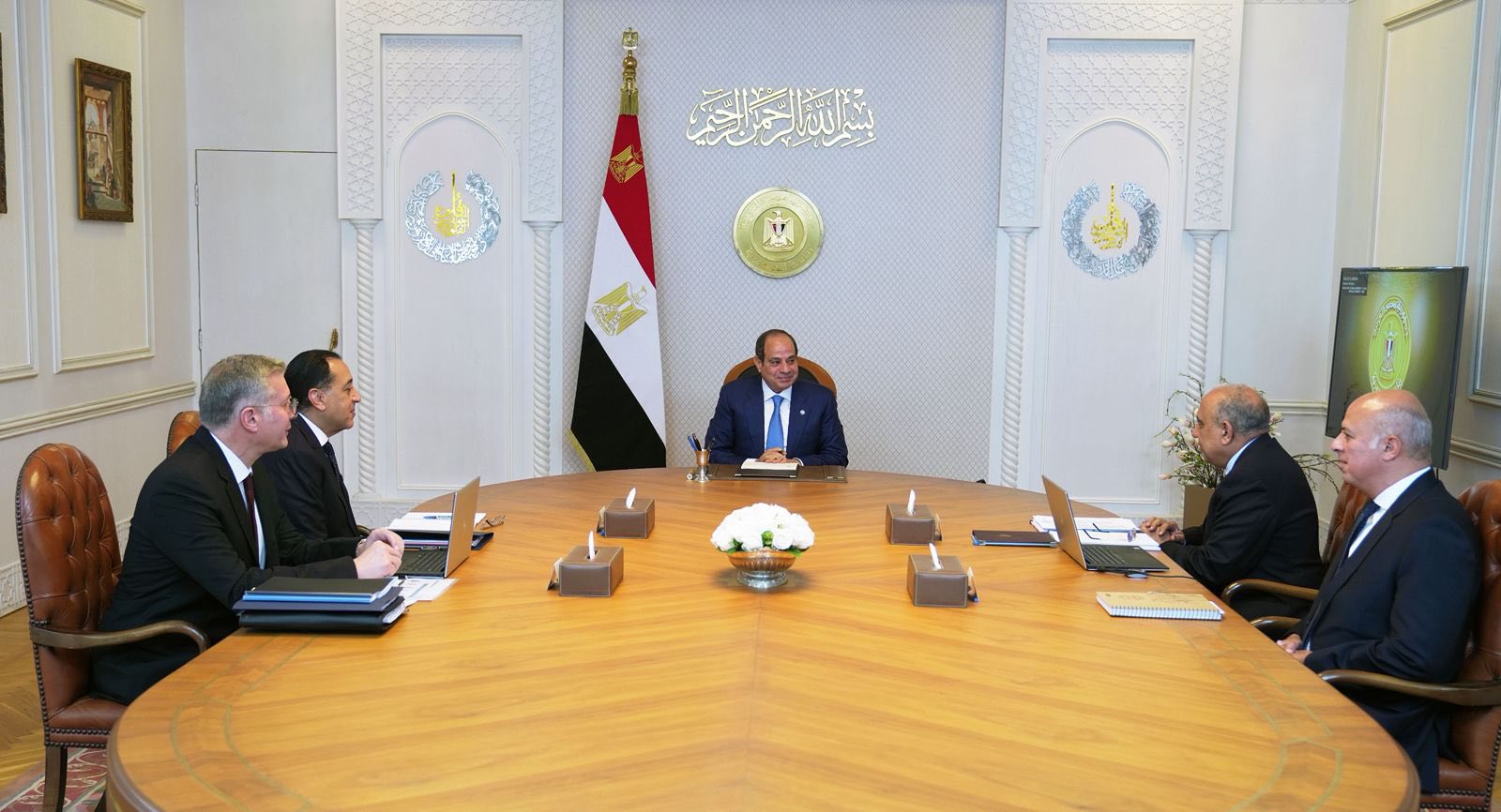
President Abdel Fattah El-Sisi met Wednesday with Prime Minister Moustafa Madbouly and top energy ministers to review Egypt’s electricity and petroleum sectors and plans to safeguard energy supplies amid escalating regional tensions affecting global markets.
The meeting, which included Minister of Electricity Mahmoud Esmat and Minister of Petroleum Karim Badawy, highlighted the government’s focus on ensuring uninterrupted power generation and sufficient gas supplies. The officials said Egypt plans to add 2,500 megawatts of renewable energy to the grid before next summer, reflecting a long-term strategy to diversify its energy mix even as geopolitical volatility affects petroleum prices.
The meeting underscored a dual-track strategy: accelerate the shift toward renewables while reinforcing natural gas supplies that remain the backbone of Egypt’s electricity system. According to presidential spokesperson Mohamed El Shinawy, the hdiscussions focused on securing adequate fuel for power plants, maintaining strategic petroleum reserves and ensuring coordination among state agencies to prevent disruptions.
The urgency reflects broader anxieties. The ongoing war in the region has rattled global energy markets, pushing up petroleum prices and complicating supply chains. For Egypt — a country that has oscillated between being a net gas exporter and importer in recent years — stability in electricity generation is not merely technical policy; it is political and economic necessity.
The officials also reviewed domestic production levels of gas, crude oil, and condensates, alongside outstanding payments owed to foreign energy companies operating in Egypt. Settling those dues, Sisi directed, should remain a priority to sustain investor confidence and encourage further exploration and drilling.
At the same time, Petroleum Minister Badawy outlined plans to modernise existing refineries to increase output and reduce the country’s fuel import bill. Expanding liquefied natural gas import infrastructure and deploying additional regasification vessels are also part of the contingency planning — measures designed to buffer against supply shocks while domestic production efforts continue.
Beyond immediate supply concerns, the discussions pointed to Egypt’s longer-term ambition to position itself as a regional energy hub. Preparations are underway for the EGYPES 2026 Conference and Exhibition in Cairo. The meeting also tackled the recently signed memorandum of understanding with Libya, which aims to deepen cooperation in oil, gas and mining — including exploration, refining and potential cross-border transport of crude and natural gas.
Sisi also emphasised the prompt settlement of dues owed to foreign energy firms and the establishment of infrastructure for liquefied gas imports and regasification ships, reflecting a broader strategy to bolster domestic production while maintaining Egypt’s role as a stable regional supplier.
For Egypt, energy security is not only an economic imperative—it is increasingly framed as a matter of national stability amid global uncertainties.
Attribution: Amwal Al Ghad English