

Egypt’s non-oil private sector contracts in Feb – PMI
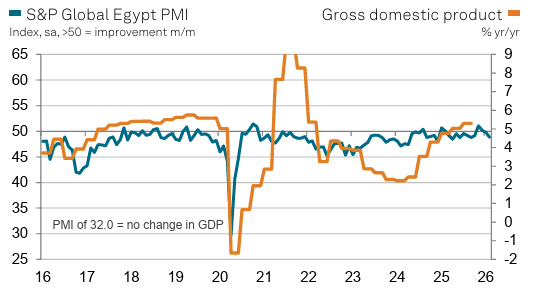
Egypt’s non-oil private sector contracted in February 2026 as business activity and demand eased for the first time in four months. The seasonally adjusted S&P Global Egypt Purchasing Managers’ Index (PMI) fell to 48.9 from 49.8 in January, slipping below the 50.0 neutral mark.
Despite the decline, the reading remains above the long-term average of 48.3 and is consistent with an annual GDP growth rate of around 4.5 per cent.
The downturn was led by a renewed fall in output, ending a three-month expansion streak. Companies cited weaker demand and rising costs as key challenges. Order books declined at the fastest pace in five months, with manufacturing, wholesale & retail, and services recording contractions, while construction saw an increase in new orders.
In response, firms reduced capacity and purchasing. Employment fell for a third consecutive month as companies combined job cuts with hiring freezes, although isolated recruitment occurred due to operational needs. Input purchases also declined, but at a slower rate than in January, keeping vendor performance largely stable.
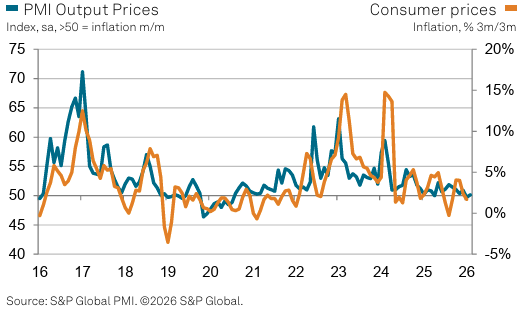
Financial pressures intensified, with input costs rising at the fastest pace since May 2025. Rising global oil and metals prices drove import and wage costs higher. Despite margin pressures, firms raised selling prices only marginally, reflecting reluctance to pass on costs.
Attribution: Amwal Al Ghad English