

Egypt’s Investment Minister: Startups must scale across Africa to reach unicorn status
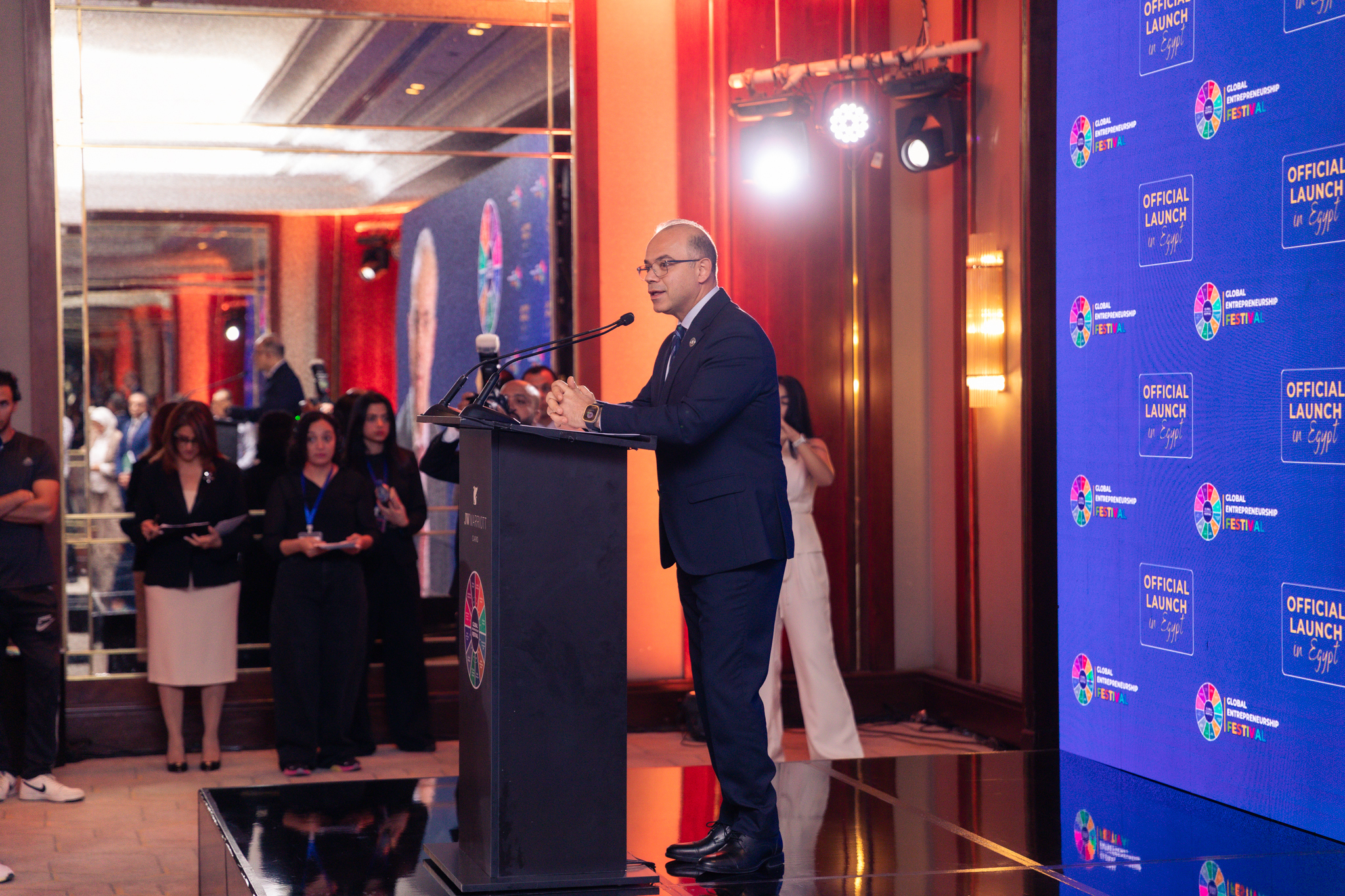
Egypt’s Minister of Investment and Foreign Trade Mohamed Farid said on Saturday that startups seeking billion-dollar valuations must expand beyond their home markets and scale across Africa, as Cairo prepares to host the 2026 Global Entrepreneurship Festival.
Speaking at a press conference announcing the event, scheduled for 6-8 Nov. in Cairo, Farid said entrepreneurship requires a greater tolerance for failure, describing it as an essential part of building successful businesses.
“We must accept failure before we accept success,” Farid said, noting that three or four out of every 10 startups fail, a pattern he described as normal in entrepreneurial ecosystems.
Farid said the path to building so-called “unicorns” could not rely on a single domestic market, arguing that companies aiming for global scale must expand into multiple African economies to achieve the size needed for billion-dollar valuations.
“If ambitions are big, growth cannot happen in one country alone,” he said, citing markets such as Kenya, Nigeria, and Ghana as examples of regional expansion opportunities.
He said stronger coordination between governments and businesses across Africa would be essential to help startups grow, attract capital, and reach global markets.
Farid also outlined a series of regulatory reforms aimed at easing the business environment for entrepreneurs, including changes to shareholder agreements, convertible debt rules, merger procedures and company valuation mechanisms.
“Entrepreneurship is the catalyst for governments’ amorphisation. Governments do not change abruptly, and policies cannot transform overnight. Big-bang amendments and sudden policy shifts often lead to chaos and create more challenges. (On the contrary,) the metamorphisation of policies has to happen on a gradual basis, and the real catalyst for that metamorphisation is entrepreneurs — especially young people with entrepreneurial skills,” Farid said.
The reforms are intended to allow founders to focus on growing their businesses rather than navigating administrative hurdles, he added.
Farid said entrepreneurs themselves had played a direct role in shaping the reforms by identifying regulatory bottlenecks, helping policymakers address longstanding barriers to raising capital, merging businesses and restructuring ownership.
He added that the government would soon launch a “TradeTech Sandbox” initiative to connect Egyptian exporters with technology platforms, logistics providers and financing services, in a move aimed at boosting exports and linking entrepreneurship more closely to the real economy.
The initiative is expected to help manufacturers and exporters match products with international market requirements, particularly in Europe, while streamlining access to trade finance and shipping services.
Egypt will host the third edition of the Global Entrepreneurship Festival in November, bringing together investors, startups and policymakers as the government seeks to position the country as a regional hub for innovation, industrial growth and export-led development.