

Egypt’s ISSC gets Dutch accreditation for EU carbon border checks
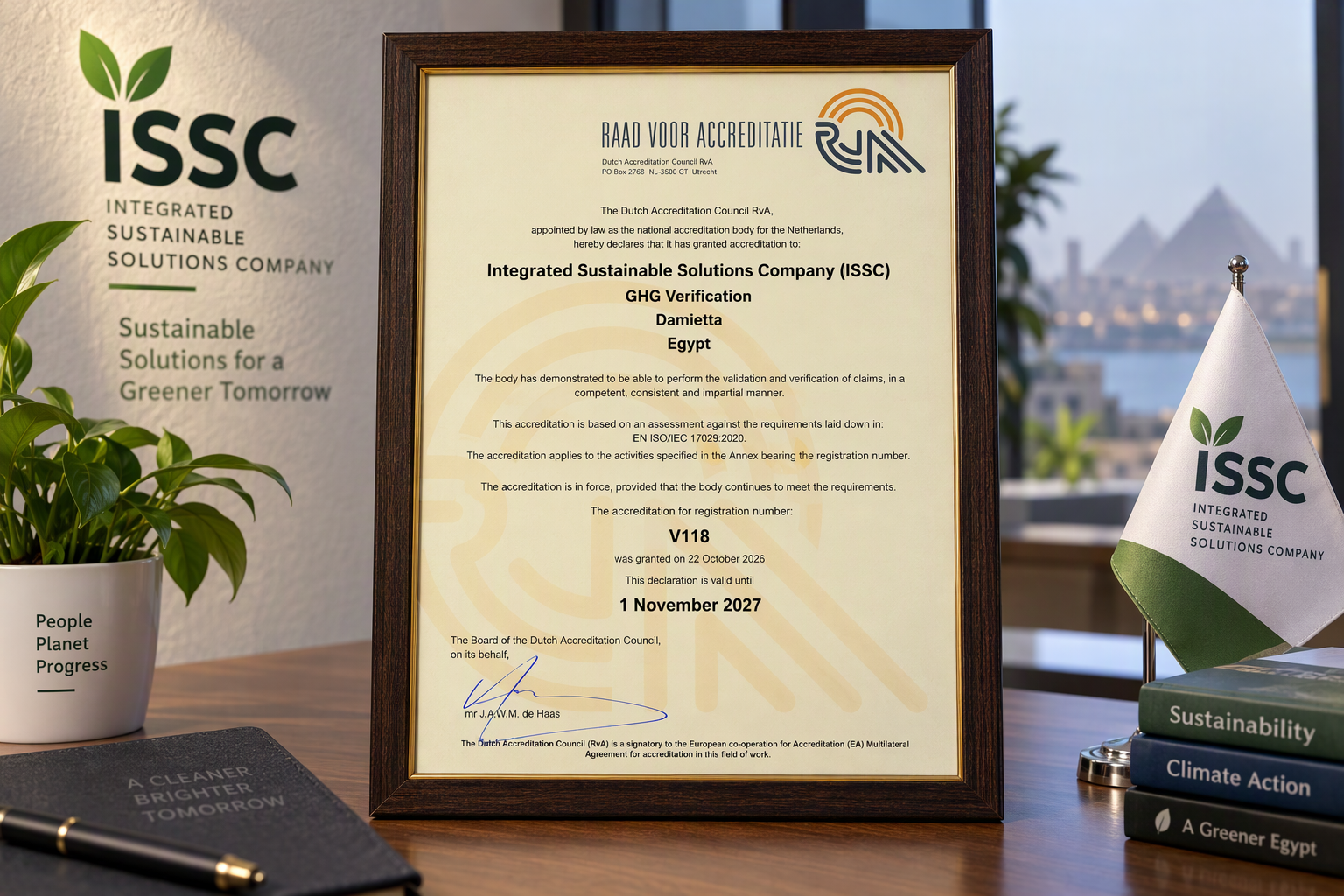
Egyptian company Integrated Sustainable Solutions Company (ISSC) has obtained accreditation from the Dutch Accreditation Council (RvA) to verify greenhouse gas emissions under the European Union’s Carbon Border Adjustment Mechanism (CBAM), Egypt’s Ministry of Industry said on Tuesday.
The accreditation makes ISSC the first organisation outside the European Union worldwide to receive such recognition, the ministry said, adding that the company would provide verification services to Egyptian exporters seeking to maintain access to the European market.
The accreditation covers five industrial sectors: iron and steel, cement, fertilisers, aluminium, and hydrogen, Mohamed Hassan, chairman of the Egyptian Accreditation Council (EGAC), said in the statement.
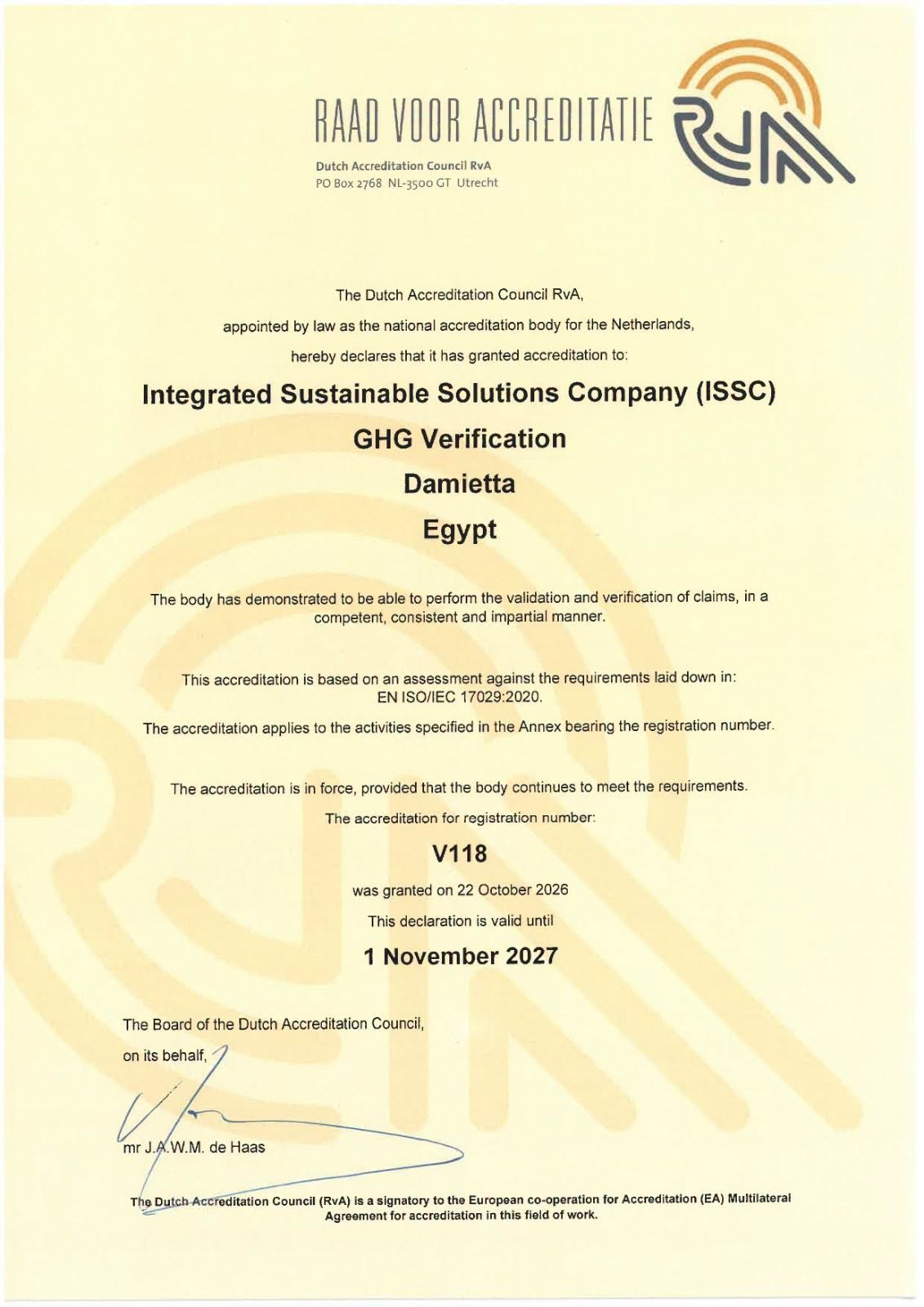
The Dutch council assessed ISSC in August at its headquarters in Damietta, with EGAC representatives attending the process. The accreditation was granted on 22 Oct., according to the certificate issued by the RvA.
The RvA announced on 10 Nov. that ISSC had become the first organisation it accredited for CBAM verification. The accreditation is registered under number V118 and is valid until 1 Nov. 2027.
ISSC has begun receiving requests for CBAM verification from industrial companies in several countries, including the United Arab Emirates, China, Türkiye, Bahrain, Russia, Brazil, Morocco, Algeria, India, Mexico, and Kuwait, as well as from 20 Egyptian companies, Hassan said.
The EU’s CBAM requires importers of certain carbon-intensive goods to report emissions generated during production. Where actual emissions data are used, they must be verified by independent verifiers accredited by an EU national accreditation body.
Accredited verifiers must also register in the EU’s CBAM Registry before issuing verification reports. The European Commission says accredited verifiers are expected to begin issuing their first reports through the registry in January 2027.
The mechanism covers imports of goods in sectors including iron and steel, cement, fertilisers, aluminium, electricity, and hydrogen, with the aim of addressing carbon emissions embedded in imported products and maintaining a level playing field for EU producers.