


Egypt directs 48% of current fiscal-year government investment to human development
Egypt has directed 48 per cent of government investment under its current fiscal-year plan to healthcare, education, and social protection, Planning and Economic Development Minister Ahmed Rostom said on Monday.
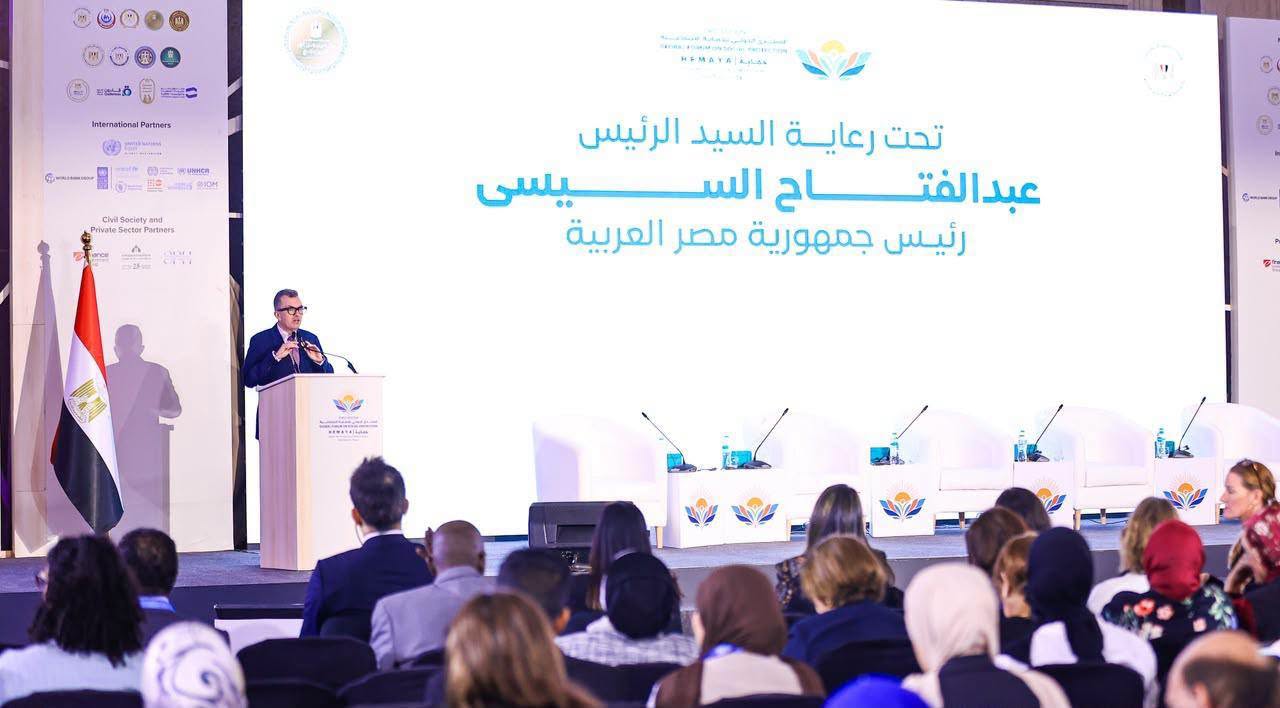
Public investment in human development totalled about 1.5 trillion Egyptian pounds over the past 12 years, Rostom said at the first Global Forum on Social Protection, held under the auspices of President Abdel Fattah El-Sisi and attended by Prime Minister Moustafa Madbouly.
The government is moving beyond direct cash assistance towards economic empowerment and capacity-building programmes aimed at helping beneficiary families develop sustainable sources of income and gradually escape poverty, he said.
“The government’s approach to social protection is evolving beyond direct cash assistance towards a more integrated model based on economic empowerment and capacity-building,” Rostom said.
The first phase of the Hayah Kareema rural development project benefits 18 million people in 20 governorates, with 73 per cent of its allocations directed towards human development and public health, Rostom said.
The government plans to move ahead with the project’s second and third phases, which are expected to bring its benefits to 57 per cent of the country’s population, he added.
Rostom also identified early childhood development as a priority, citing Egypt’s 2026 Voluntary National Review (VNR), which highlighted progress in expanding child-sensitive social protection systems and healthcare and education services for children.
The government is also working alongside its Takaful and Karama cash transfer programme to introduce economic empowerment initiatives that will help beneficiary households build sustainable livelihoods, he said.
The National Economic Transformation Programme for 2027–2030 aims to create more fiscal space for social spending, expand the universal health insurance system, and improve the quality and competitiveness of pre-university education while aligning it more closely with labour-market needs, Rostom said.
“Comprehensive human development is essential to ensuring that the benefits of economic growth are distributed fairly. Egypt Vision 2030 has laid the foundations for this approach, supported by integrated sectoral strategies, particularly the National Comprehensive Social Protection Framework,” Rostom said.
The forum’s first edition, held under the theme “Social Protection in a Changing World”, brought together representatives of United Nations organisations, the World Bank, development partners, and international institutions.