

Egypt launches first locally developed industrial robot with 80% local content
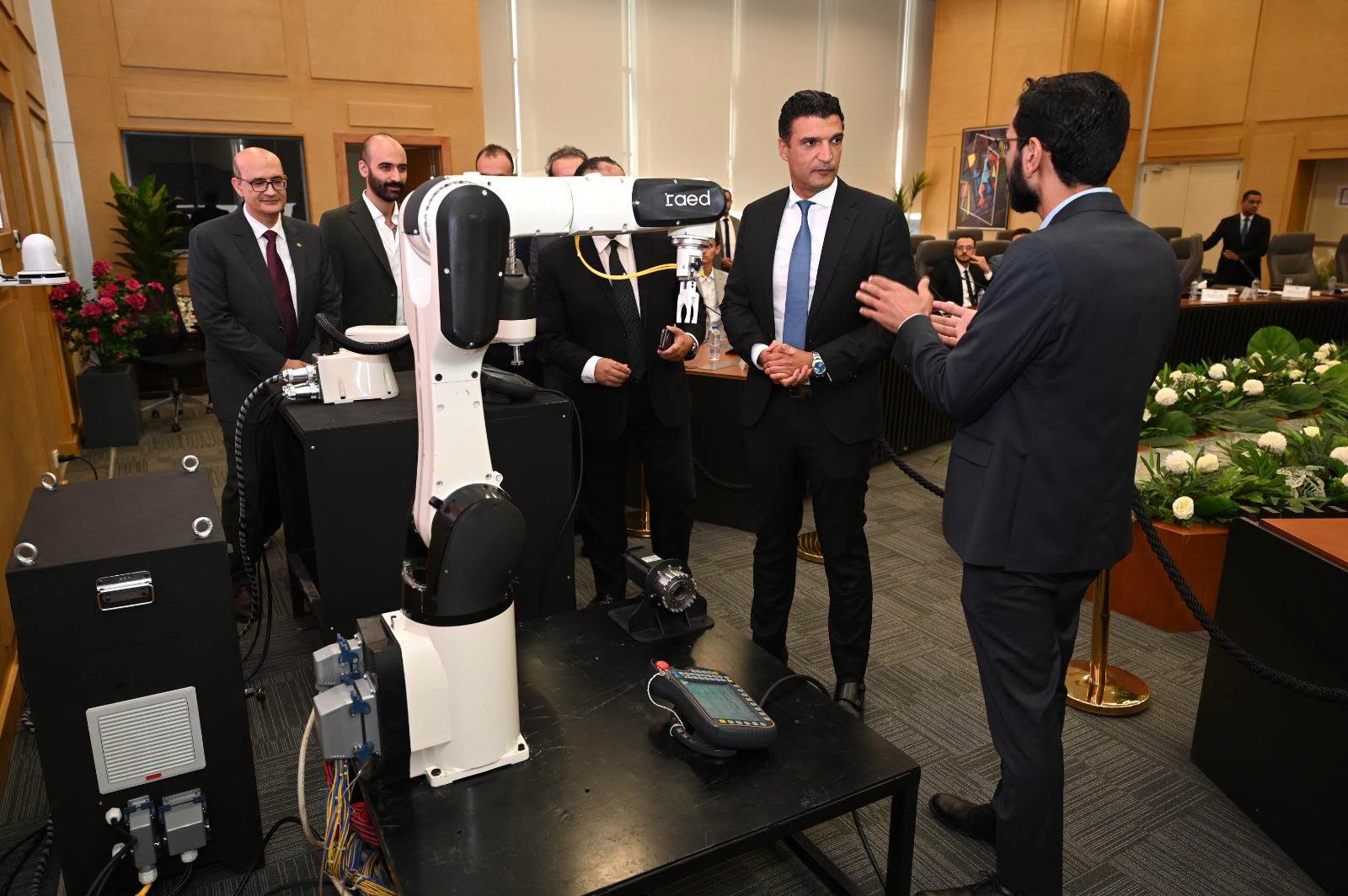
Egypt has launched and delivered its first industrial robot developed locally by Egyptian engineers and technology company Raedbots, as the government seeks to deepen domestic manufacturing and localise industrial technology, the Industry Ministry said on Wednesday.
Industry Minister Khaled Hashem attended the launch and delivery ceremony for the robot, developed through cooperation among Raedbots, the Industrial Modernisation Centre (IMC), and CUBII, and designed to integrate with an actual industrial application.
The robot currently has a local content ratio of 80 per cent, with the developers targeting 90 per cent after manufacturing its motor locally in the coming period, the ministry said.
“The launch and delivery of Egypt’s first industrial robot is an important step in localising technology and deepening domestic manufacturing. Technology and innovation are key drivers of industrial development and competitiveness.” Hashem said.
“Our goal is not simply to establish factories that produce goods, but to build more efficient, flexible, and competitive factories that use the latest global technologies while developing the capacity to develop some of those technologies locally.”
“The ‘Made in Egypt’ concept is evolving and expanding” to reflect Egypt’s capabilities in manufacturing and innovation, strengthening technology in local industry, and integrating Egyptian companies into global supply chains, he said.
Hashem said the project demonstrated Egyptian youth’s potential to innovate, develop technology, and turn knowledge into industrial products. He thanked the engineers and young people involved in developing the robot, as well as Raedbots, CUBII, and Mansoura University for their contributions.
Hashem said the Industry Ministry is focusing on localising the machinery output and production lines as enabling industries under Egypt’s industrial strategy. He added that the ministry will continue to support initiatives that target localising technology, deepening domestic manufacturing, improving industrial competitiveness, and creating opportunities for young Egyptians.
The ministry will monitor the robot’s performance with CUBII, its industrial user, to assess whether it meets the company’s expectations and industrial requirements, Hashem said.
He added that the local manufacture of the robot was not an end in itself but the beginning of a path for Egyptian industry to keep pace with technological advances. He called for more locally developed technological solutions and partnerships between industry, universities, and technology companies.
The launch ceremony included a demonstration of the robot’s operation, with Raedbots explaining its operating mechanism and features.
Ayman Elbayaa, CEO of Egypt’s Industrial Modernisation Centre (IMC), said the centre was working to bridge the gap between ideas, innovation, and practical industrial applications, while helping industry adopt Fourth Industrial Revolution technologies.
The launch of the robot, designed to integrate with CUBII’s machinery, alongside partnerships with Raedbots and Mansoura University, reflected a shift towards technology localisation, innovation engineering, and reverse engineering, Elbayaa said.
The event also saw the signing of three cooperation protocols.
The first, between the IMC and Raedbots, will provide technical support services to industrial facilities. The second, between Raedbots and CUBII, covers the supply of robots used in packaging machinery.
The third agreement, between Mansoura University’s Faculty of Engineering and Raedbots, will provide students with educational robots for research and training purposes.