

Egypt opens €3.8 mln waste stations under Kitchener Drain Depollution Project
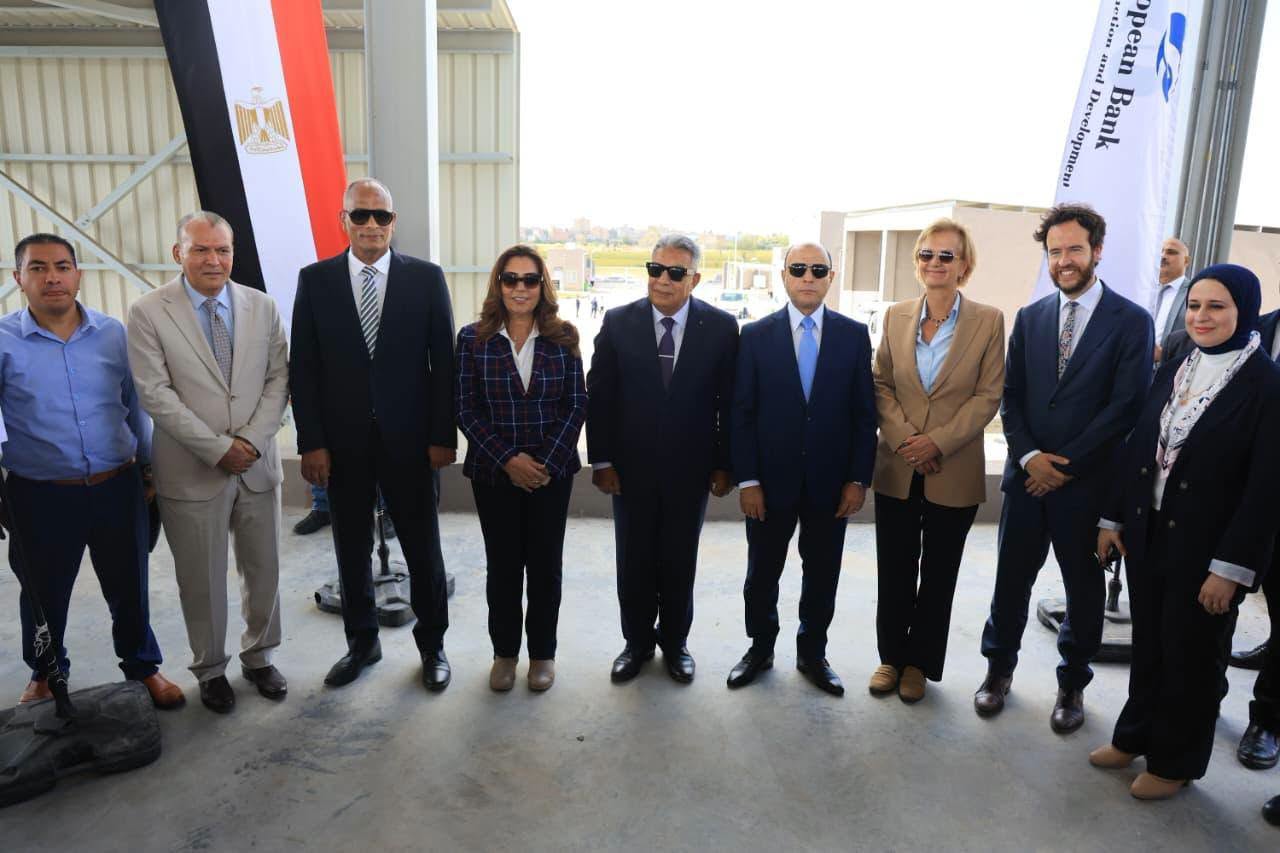
Egypt has opened two waste transfer stations in Dakahlia and Gharbia governorates at a combined cost of €3.8 million under a project to improve water quality in the Kitchener Drain, the Ministry of Local Development and Environment said Monday.
The stations, located in Nabarouh City in Dakahlia and Neishil Village in Gharbia, each have a capacity of 300 tons of waste per day and are part of the solid-waste component of the Kitchener Drain Depollution Project, which covers Gharbia, Kafr El-Sheikh, and Dakahlia governorates in the Nile Delta region.
The project is financed by a €79 million loan from the European Bank for Reconstruction and Development (EBRD) and an €8 million grant from the European Union.
The Nabarouh Station serves Nabarouh City and five local village units: Tanikh, Dirin, Nasha, Bahout and Al-Taybeh.
The Neishil Station serves Qutur City and six village local units: Ibshaway, Sigin El-Kom, Baltag, Ashin, Damat, and Shubra Nabass. It also serves Al-Ameriya, Dakhlia, Al-Hayatim, and Balqina in Mahalla El-Kubra, the ministry said.
The two stations use a direct unloading system under which collection trucks unload waste at the stations into larger transfer trucks positioned below. The system separates waste collection from longer-distance transportation, allowing collection vehicles to return to their service areas more quickly.
The system is expected to reduce operating and maintenance costs, improve the efficiency of the existing waste-collection fleet by allowing more collection trips, and reduce the cost of transporting each ton of waste, particularly over longer distances, the ministry said.
The Nabarouh Station is expected to reduce greenhouse-gas emissions by up to 4.4 tons of carbon dioxide equivalent per day through lower fuel consumption, while improving the efficiency of the existing waste-collection fleet and allowing services to be expanded without additional assets, the ministry said.
Local Development and Environment Minister Manal Awad said the Kitchener Drain Depollution Project aims to reduce pollution along the drain’s main course in Gharbia and Kafr El Sheikh and its branches passing through Nabarouh and Belqas in Dakahlia.
The project has three components aimed at improving water quality by reducing pollution from untreated domestic and industrial wastewater and solid waste, as well as rehabilitating and upgrading the drain.
The ministry is implementing the solid-waste management component in Dakahlia, Gharbia, and Kafr El Sheikh in cooperation with development partners, Awad said.
It has prepared an investment plan that includes five waste-recycling plants with a combined capacity of 4,200 tons per day. Two plants are scheduled to open in December, while another two are expected to open in February 2027, Awad said.
The project also includes 47 pieces of equipment for waste collection and transportation and the development and upgrading of eight garages to support the operation and preventive and periodic maintenance of the collection and transport fleet.
As part of the environmental measures, the project includes the closure and rehabilitation of the Qalabsho public dumpsite in Dakahlia, which has accumulated about 2.5 million cubic metres of waste across 60 feddans, in line with environmental standards and requirements.
Awad said the two transfer stations were established based on economic and technical studies to reduce transportation costs and improve the efficiency of waste collection and transportation operations.
Angelina Eichhorst, Head of the European Union Delegation to Egypt, said the two stations were the first projects implemented by Egyptian ministries under the Kitchener Drain Depollution Project to be opened. She added that Awad’s recent focus on the project had helped accelerate work on its planned projects.
Officials at the opening reviewed the solid-waste component and the two stations, including their capacities, service areas, and operating mechanisms.
The project is part of broader efforts to improve environmental and public health conditions in Dakahlia, Gharbia, and Kafr El Sheikh, Awad said, directing officials to accelerate completion of the remaining activities and bring them into service according to schedule.