

Egypt unearths Second Intermediate Period tombs, homes, kilns in Ismailia
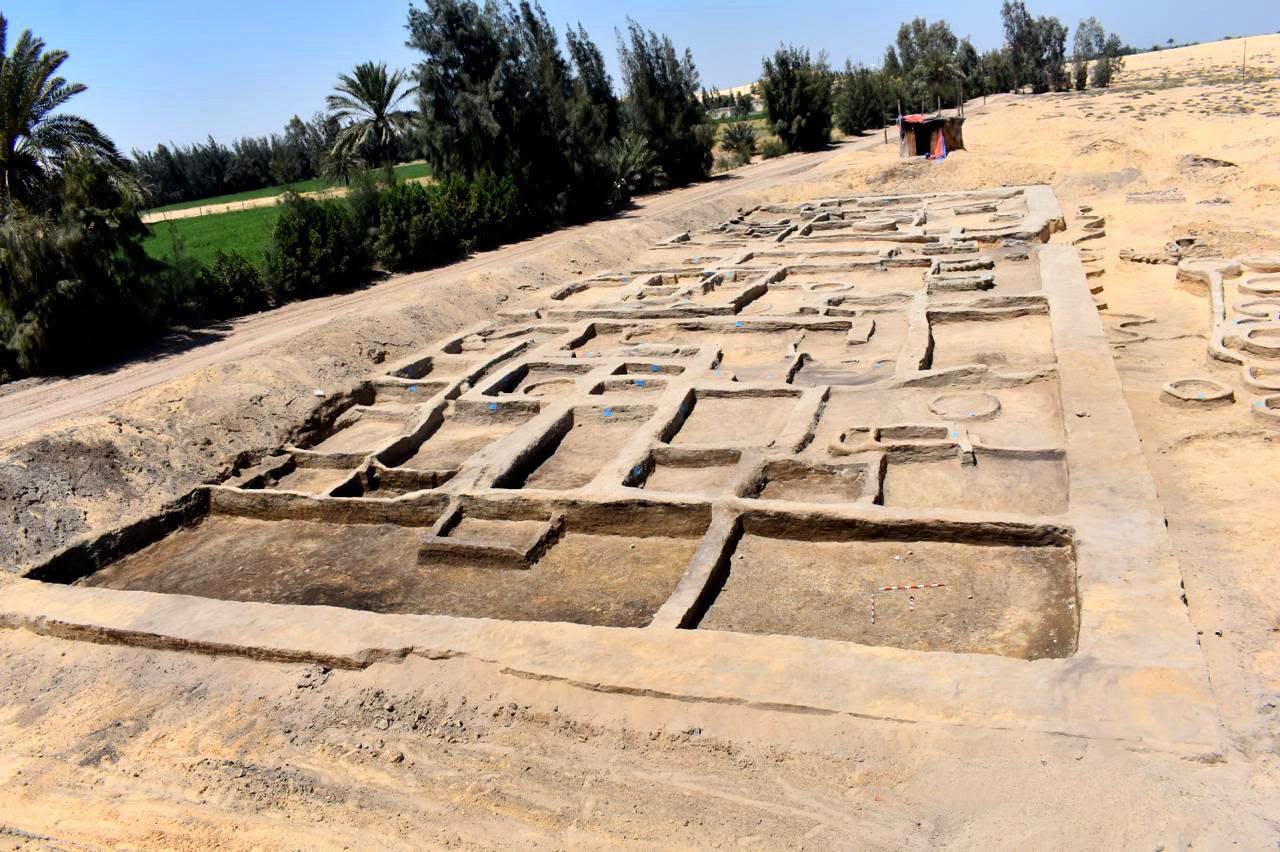
Egyptian archaeologists have uncovered tombs, a residential complex, and industrial facilities dating back to the Second Intermediate Period at the archaeological site of Tell El-Koa in Ismailia, the Tourism and Antiquities Ministry said on Monday.
The discovery, made by an Egyptian archaeological mission in the Wadi Tumilat area, included 10 mudbrick tombs, a settlement area, kilns, and storage silos, offering fresh insight into settlement patterns in Egypt’s eastern Delta during a key transitional period in ancient history.
Tourism and Antiquities Minister Sherif Fathy said the find provides a clearer picture of life in the region during the era, showing an integrated community made up of residential areas, storage facilities, production sites, and burial grounds.
According to the statement, the tombs date back to the 15th Dynasty, part of the Second Intermediate Period, and vary in size and architectural style, including mastaba-like rectangular structures and others with decorated façades.
Archaeologists uncovered a 30-by-60-metre residential complex, enclosed by a mudbrick wall. This complex contains halls, multiple rooms, kilns, and silos for storage.
Supreme Council of Antiquities Secretary-General Hisham El-Leithy said the discovery highlights the strategic importance of Tell El-Koa along the Wadi Tumilat corridor, one of the main historical routes linking the eastern Delta to Egypt’s eastern frontier.
He said the site could help researchers better understand the transition from the Second Intermediate Period to the early New Kingdom, particularly in terms of population continuity, trade movement, and social transformation.
Excavations also yielded artefacts including scarabs, bronze tools, pottery, alabaster cosmetic containers and Tell el-Yahudiya ware, a pottery style closely associated with the period.
Human remains found at the site showed varying burial positions and age groups, with preliminary studies estimating the dead were between 25 and 40 years old.
For the first time at the site, archaeologists discovered burials outside the mudbrick tombs, some in crouched positions — an unusual practice that researchers said requires further study.
Mustafa Hassan, director of Ismailia Antiquities and head of the excavation mission, said evidence suggests the site remained active until the middle of the 18th Dynasty, spanning the transition from Hyksos rule to the rise of the New Kingdom.
Located on the southern edge of Wadi Tumilat in Ismailia’s Qassasin district, Tell El-Koa covers around 55 feddans and is considered one of the most significant Second Intermediate Period sites in Egypt’s eastern Delta.
Attribution: Amwal Al Ghad English