

Egypt puts freelancers at heart of offshoring growth strategy – ITIDA vice president
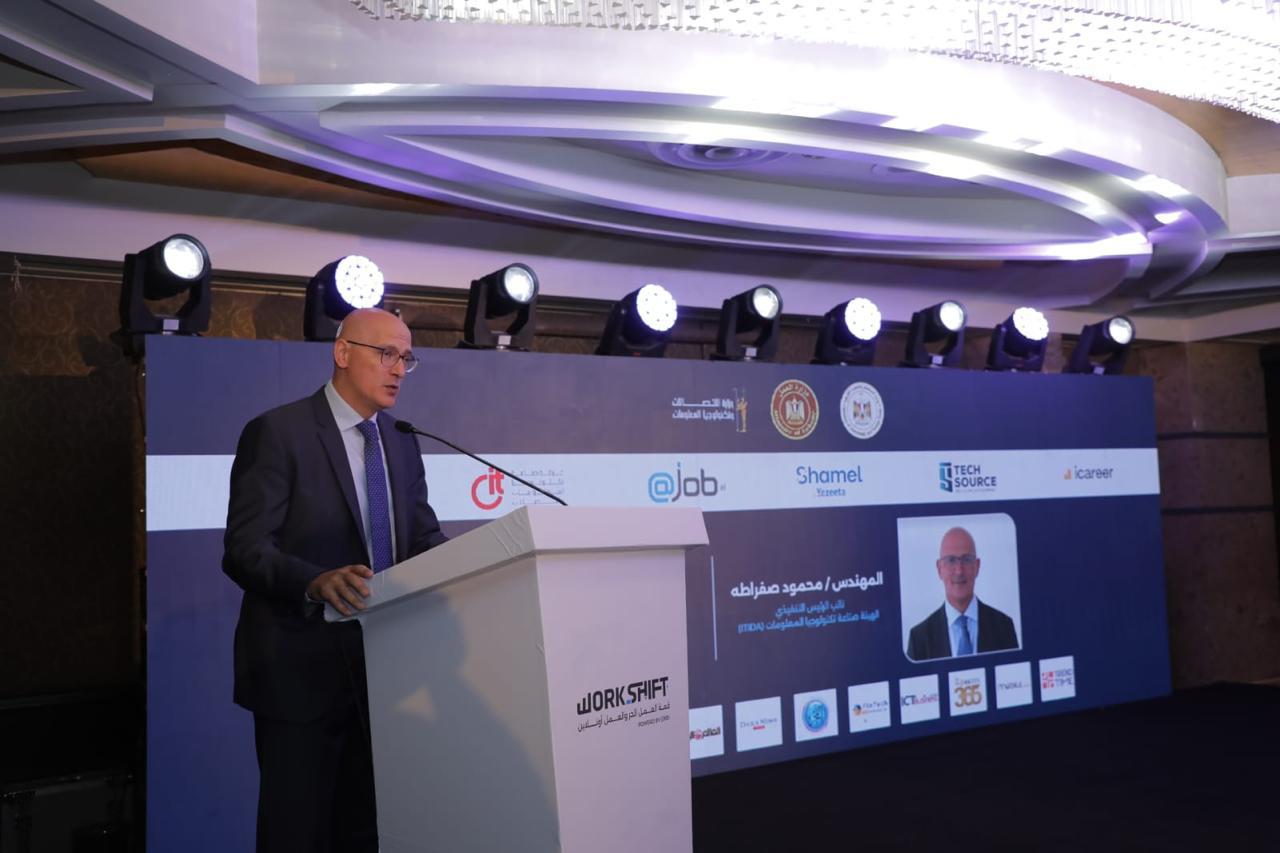
Egypt is stepping up efforts to expand its share of the global offshoring market by placing digital freelancers at the centre of its strategy to boost cross-border services exports, a senior official at the Information Technology Industry Development Agency (ITIDA) said on Sunday.
Mahmoud Sofrata, ITIDA’s vice president for market development, said structural changes in the global labour market were accelerating the rise of freelance work, transforming it from an alternative source of income into a core pillar of the digital economy.
“The expansion of freelancing is contributing directly to digital exports and strengthening Egypt’s integration into global services markets,” Sofrata said at the WorkShift Summit 2026 in Cairo, speaking on behalf of ITIDA Chief Executive Ahmed Elzaher.
Sofrata said Egypt ranked ninth globally in freelancing, citing World Bank data, with around 850,000 digital freelancers, underscoring the country’s growing role in international digital services.
He attributed that momentum to Egypt’s talent pipeline, with nearly 750,000 university graduates entering the labour market each year, including about 50,000 engineers, creating one of the largest technical talent pools in Europe, the Middle East, and Africa.
That workforce, he said, is multilingual, cost-competitive and increasingly specialised in digital technologies.
Still, Sofrata said Egypt remained in the early stages of fully capitalising on the opportunity as global demand for digital skills rises and competition among offshoring destinations intensifies.
He described freelancing, particularly in technology, as a human-capital-driven industry where competitiveness depends not only on technical expertise, but also on pricing, communication skills and client management.
To strengthen Egypt’s position, ITIDA has expanded training programmes and launched initiatives, including Egypt FWD and ITIDA Gigs, to equip freelancers with the skills needed to compete globally and connect with international demand.
The agency is also preparing new incentive packages for digital freelancers aimed at improving their competitiveness and increasing their contribution to Egypt’s digital exports, Sofrata said.
Egypt’s information technology and outsourcing sector accounts for more than 6 per cent of gross domestic product, with the country targeting digital services offshoring revenues of $6 billion in 2026 after generating $5.2 billion in 2025.
The WorkShift Summit 2026 brought together government officials and industry stakeholders, including representatives from the ministries of communications, labour, and investment, as part of wider efforts to expand digital employment and support a knowledge-based economy.