

Egypt signs TIR guarantee deal to facilitate cross-border trade
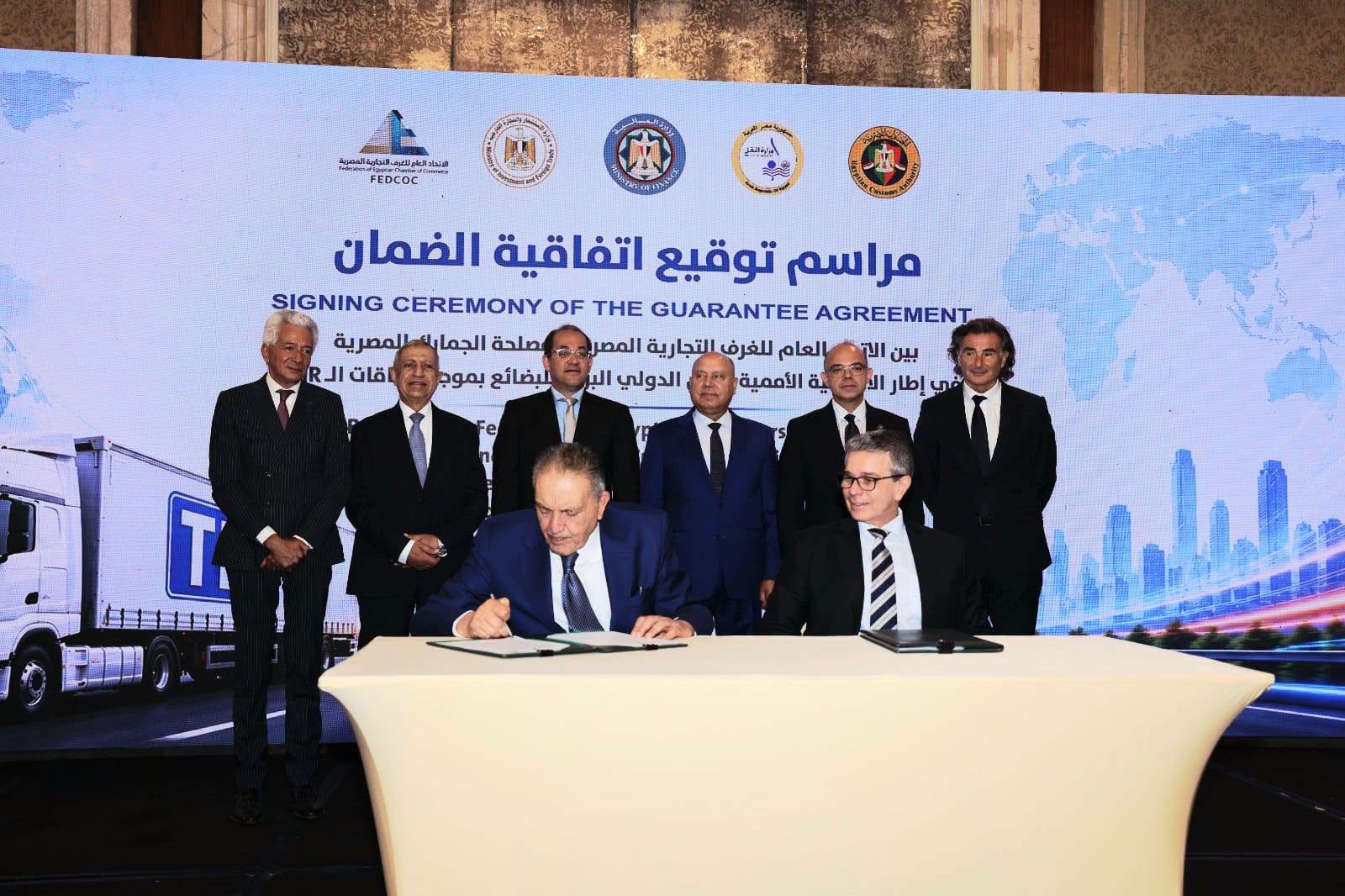
Egypt signed a guarantee agreement on Monday to implement the United Nations-backed Transports Internationaux Routiers (TIR) system, aiming to simplify customs procedures, cut border clearance times, and strengthen its position as a regional transport and logistics hub.
The agreement was signed by the Federation of Egyptian Chambers of Commerce (FEDCOC) and the Egyptian Customs Authority in the presence of Transport Minister Kamel El-Wazir, Finance Minister Ahmed Kouchouk, Investment Minister Mohamed Farid, International Road Transport Union (IRU) Secretary General Umberto de Pretto, and senior government officials.
The TIR system enables goods to move across international borders under a single customs guarantee, reducing customs formalities, lowering transport costs, and shortening transit times while improving the security of cross-border cargo movements.
“Signing the TIR guarantee agreement reflects Egypt’s steady efforts to adopt international best practices that facilitate trade, simplify customs procedures and improve the movement of goods across borders,” El-Wazir said.
He said the TIR system would help reduce customs clearance times, lower logistics costs, strengthen supply chain efficiency, and improve the competitiveness of Egyptian exports, supporting broader efforts to attract investment and expand trade.
El-Wazir said the agreement forms part of the government’s strategy, led by President Abdel Fattah El-Sisi, to develop the transport sector as a driver of economic growth, industrial development, exports, and private investment.
He added that Egypt has shifted its transport strategy in recent years towards developing integrated logistics corridors linking seaports, dry ports, industrial zones, agricultural areas, and mining centres through an expanding network of railways, high-speed rail lines and highways.
The minister also highlighted the expansion of Egypt’s maritime transport network, including the roll-on/roll-off shipping service linking Damietta Port with Italy’s Trieste Port, which facilitates cargo movement between Europe and Gulf countries through Egyptian ports while supporting bilateral trade with European markets.
Attribution: Amwal Al Ghad English