

Egypt, Malaysia upgrade ties to strategic partnership, pledge to boost trade
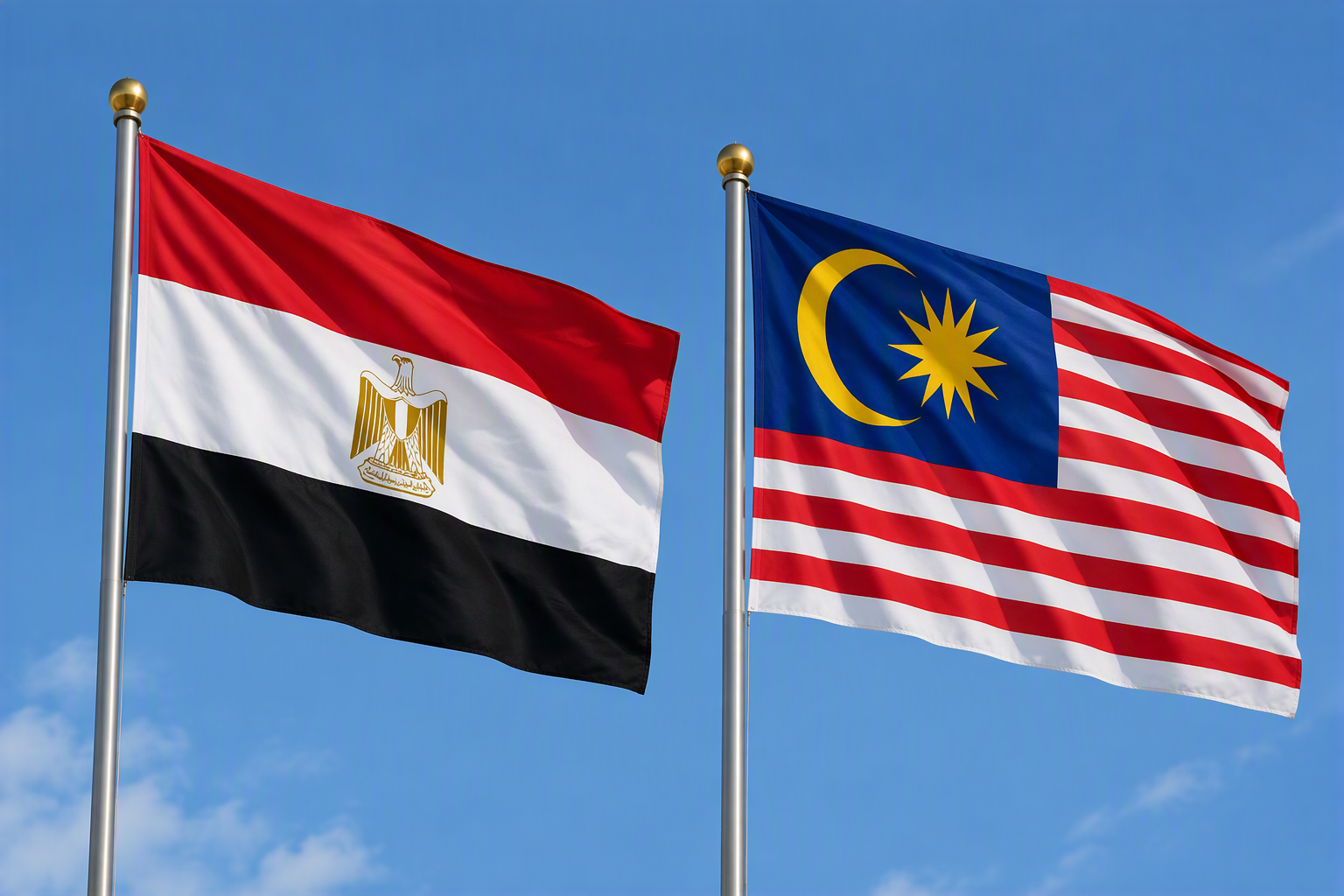
Egypt and Malaysia have upgraded their bilateral relations to a strategic partnership, pledging to expand trade and investment and strengthen cooperation in renewable energy, manufacturing, semiconductors, and infrastructure, according to a joint statement issued on Monday.
The announcement followed Egyptian President Abdel Fattah El-Sisi’s state visit to Malaysia on 9-10 October, his first to the Southeast Asian country, at the invitation of Malaysian King Sultan Ibrahim.
El-Sisi and Malaysian Prime Minister Anwar Ibrahim held talks on 10 October covering bilateral relations, trade and investment, defence and security, energy, education, tourism, and regional and international issues, the statement said.
The two leaders agreed to convene the second meeting of their joint commission and the second round of bilateral consultations at the earliest opportunity. Egypt and Malaysia established diplomatic relations on 10 November 1959.
Trade, investment, and industrial cooperation
The two countries pledged to strengthen trade and investment by encouraging business-led cooperation in agriculture, the halal industry, education and vocational training, digital transformation, renewable energy, infrastructure, automotive manufacturing, industrial production, and semiconductors.
They also highlighted their potential to serve as economic hubs and gateways to wider markets, with Malaysia offering access to Southeast Asian markets through the Association of Southeast Asian Nations (ASEAN), while Egypt provides links to Arab, African, and European markets.
Malaysia backed Egypt’s proposal to formalise its engagement with ASEAN by pursuing sectoral dialogue partner status. It also expressed interest in Egypt’s support for ASEAN efforts to explore cooperation with the African Union.
Education, aviation, and security
The leaders pledged to strengthen defence and security cooperation and expand educational exchanges, including scholarships, academic research, language programmes, and student exchanges.
Malaysia also committed to expanding capacity-building cooperation with Egypt in mutually agreed priority areas through the Malaysian Technical Cooperation Programme (MTCP).
The two sides encouraged their national airlines to explore closer cooperation to improve air connectivity and support tourism, trade and cultural exchanges.
Regional issues
The leaders reaffirmed their support for a two-state solution to the Palestinian issue, including the establishment of an independent Palestinian state based on the pre-1967 borders, with East Jerusalem as its capital. They rejected plans to displace Palestinians and called for consolidating the ceasefire in Gaza, unrestricted humanitarian aid, full implementation of United Nations Security Council Resolution 2803 (2025), and the return of the Palestinian Authority to the enclave.
Anwar expressed Malaysia’s appreciation for Egypt’s role in efforts to end the war in Gaza and facilitate Malaysian humanitarian assistance to Palestinians. The leaders also condemned escalating settler violence, land confiscations, and settlement construction in the West Bank and East Jerusalem, and stressed the importance of preserving Palestinian territorial unity and the mandate of the United Nations Relief and Works Agency for Palestine Refugees in the Near East.
On Lebanon, they reaffirmed support for its sovereignty, unity, and territorial integrity, calling for an end to attacks by the occupying power, its withdrawal from occupied Lebanese territory and full implementation of Security Council Resolution 1701 (2006).
They also condemned violations and incursions into Syrian territory and called for withdrawal from occupied Syrian land and compliance with the 1974 Disengagement of Forces Agreement.
The two countries pledged to work towards peace and stability in the Gulf, West Asia, the Horn of Africa, and Sudan. They stressed the importance of freedom of navigation and uninterrupted international trade in the Red Sea and Gulf of Aden, while opposing arrangements that violate the sovereign rights of coastal states.
Nile security and multilateral cooperation
Malaysia acknowledged the importance of the Nile River to Egypt’s water security. Both sides called for peaceful resolution of disputes, restraint from unilateral actions, and stronger dialogue among Nile Basin countries to reach mutually beneficial agreements in accordance with international law.
The leaders also pledged to strengthen cooperation through multilateral forums, including the United Nations, the Organisation of Islamic Cooperation, the Non-Aligned Movement, the Group of 77, and the D-8 Organisation for Economic Cooperation.
Malaysia expressed its aspiration to join the BRICS grouping and said it hoped to work closely with Egypt and other members towards that goal while advancing the interests of the Global South.
Sisi thanked the Malaysian king, government, and people for their hospitality and invited Sultan Ibrahim to visit Egypt, the statement said.