

Egypt seeks more Chinese investment in EVs, advanced manufacturing
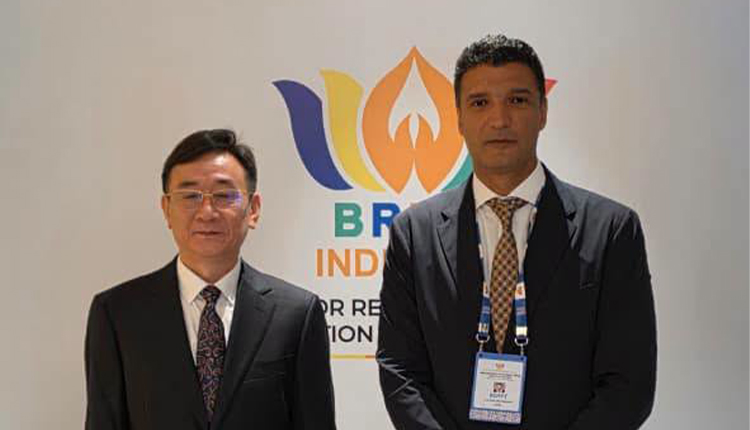
Egypt is seeking to attract more Chinese investment into electric vehicles, batteries, and advanced manufacturing as it deepens industrial cooperation with Beijing, Industry Minister Khaled Hashem said on Thursday.
Hashem discussed expanding Chinese investment, local manufacturing, and technology transfer with Wang Weiming, chief engineer of the Chinese Ministry of Industry and Information Technology, on the sidelines of the BRICS Industry Ministers’ Meeting in Jaipur, according to a statement from Egypt’s Industry Ministry.
The minister said Chinese companies have become key industrial partners in Egypt, with investments spanning sectors including automotive manufacturing, textiles, food processing, chemicals, pharmaceuticals, electronics, and building materials.
He said Egypt has identified electric vehicles, batteries, automotive components, buses, machinery and equipment, industrial robotics, and pharmaceutical inputs among the priority sectors for future cooperation under the country’s industrial development strategy.
Hashem added that Egypt is in discussions with several Chinese companies on manufacturing projects aimed at increasing local content, transferring technology, and using Egypt as a production and export base serving markets across the Middle East and Africa.
He also said closer cooperation on industrial zones and manufacturing clusters could help accelerate joint projects, expressing hope that a future visit by Chinese President Xi Jinping to Egypt would provide additional momentum for bilateral industrial cooperation.
Weiming said China supports greater participation by Chinese companies in Egypt’s industrial development plans and would encourage firms operating in the electric vehicle, battery, robotics, and machinery sectors to explore investment opportunities in the country.
The two sides also discussed strengthening industrial cooperation under the Forum on China-Africa Cooperation (FOCAC), including expanding local manufacturing, developing regional value chains, and increasing industrial processing of raw materials.
The discussions come as Egypt seeks to expand local manufacturing, reduce import dependence, and position itself as a regional production and export hub under its industrial development strategy.