

Egypt signs three agreements for $650 mln Dandara solar project
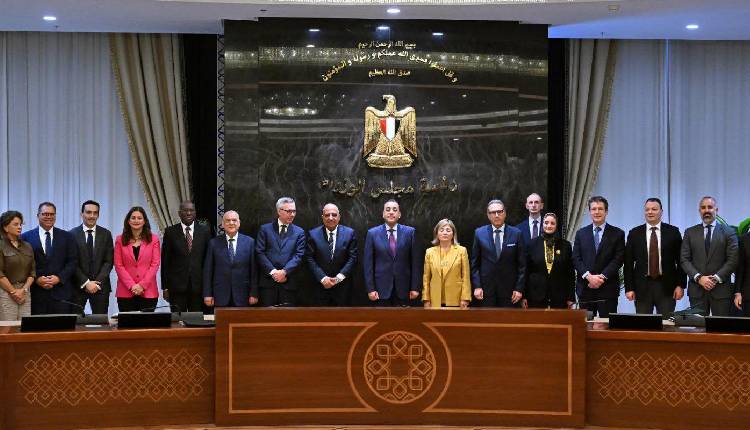
Egypt signed three agreements on Monday to finance and develop the Dandara Solar Energy Project in Nag Hammadi with a planned capacity of 1,000 megawatts of solar power and 200 megawatt-hours of battery storage, at a total investment of approximately $650 million.
The preliminary financing terms agreement was signed by Terje Pilskog, CEO of Norwegian company Scatec ASA; Gelsomina Vigliotti, Vice President of the European Investment Bank (EIB); Mark Davis, the European Bank for Reconstruction and Development’s (EBRD) Managing Director for the Southern and Eastern Mediterranean region; and Abdourahmane Diaw, the African Development Bank Group’s Country Manager for its Egypt office.
The agreement covers the preliminary terms for financing the project.
The second agreement, covering the project’s connection to Egypt’s national electricity grid, use of the grid and supervision of the implementation of connection lines, was signed by Mona Rezk, Chairperson of the Egyptian Electricity Transmission Company (EETC); Mohamed El-Saadawi, Chairman of Metallurgical Industries Holding Company; and Mohamed Amer, Chairman of Dandara Solar Power SAE.
The third agreement, covering the National Bank of Egypt’s participation in Dandara Solar Power SAE, was signed by Mohamed Amer and Ahmed ElSaid, the bank’s Chief Investment Officer for Investments and Investment Trustees.
The project will be implemented in two phases. The first will comprise a 500 megawatt solar power plant and 100 megawatt-hours of battery storage, while the second will add another 500 megawatts of solar capacity and 100 megawatt-hours of storage.
The project is expected to meet about one-third of the electricity needs of the Aluminium Company of Egypt (Egyptalum), a subsidiary of Metallurgical Industries Holding Company.
It is also expected to reduce carbon emissions from aluminium production, enhance the competitiveness of Egyptian products and improve their access to international markets as environmental requirements for exports become more stringent.