

Egypt’s non oil private sector contracts in June – PMI
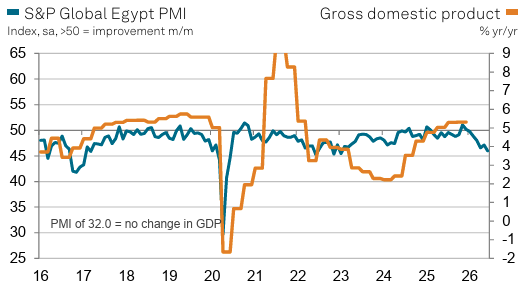
Egypt’s non-oil private sector contracted at its fastest pace since January 2023 in June, with the S&P Global Egypt Purchasing Managers’ Index (PMI) falling to 46.0 from 47.1 in May.
The headline PMI remained below the neutral 50.0 threshold for the sixth consecutive month, signalling a marked deterioration in operating conditions and indicating annual GDP growth slowed to about 3.8 per cent at the end of the second quarter.
New orders fell at the fastest pace since November 2022, with around 27 per cent of surveyed firms reporting weaker sales compared with 11 per cent reporting an improvement. Companies attributed the decline to liquidity issues among clients, raw material shortages, slower supply chains, rising prices, and weaker regional trade linked to the Middle East conflict.
The downturn pushed non oil business activity lower for the fifth consecutive month, with the pace of decline the steepest since the start of 2023. Employment also continued to decline, although job losses eased slightly as firms mainly relied on natural attrition rather than layoffs.
Purchasing activity decreased during the month, while businesses continued to build inventories as a hedge against expected price increases and ongoing supply disruptions. Supplier delivery times lengthened again because of raw material shortages, shipping disruptions in the Strait of Hormuz, and higher fuel prices.
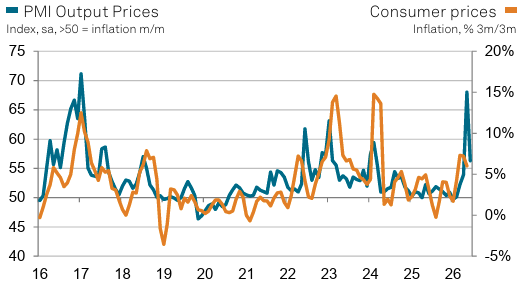
Inflationary pressures eased from May’s near record highs, with both input cost and output price inflation slowing. However, businesses said the Middle East conflict continued to drive up fuel and raw material costs, while staff costs rose at the second fastest pace since January 2018.
Despite current challenges, firms remained optimistic about future output, citing expectations of easing regional tensions and increased government support, although business confidence softened slightly from May.
Attribution: Amwal Al Ghad English