
Egypt improves Cairo Airport’s energy efficiency by 12.2% – minister
Egypt has reduced energy consumption at Cairo International Airport by around 4% despite a more than 9% increase in passenger traffic, improving energy efficiency per passenger by 12.2%, Civil Aviation Minister Sameh Elhefny said Thursday.
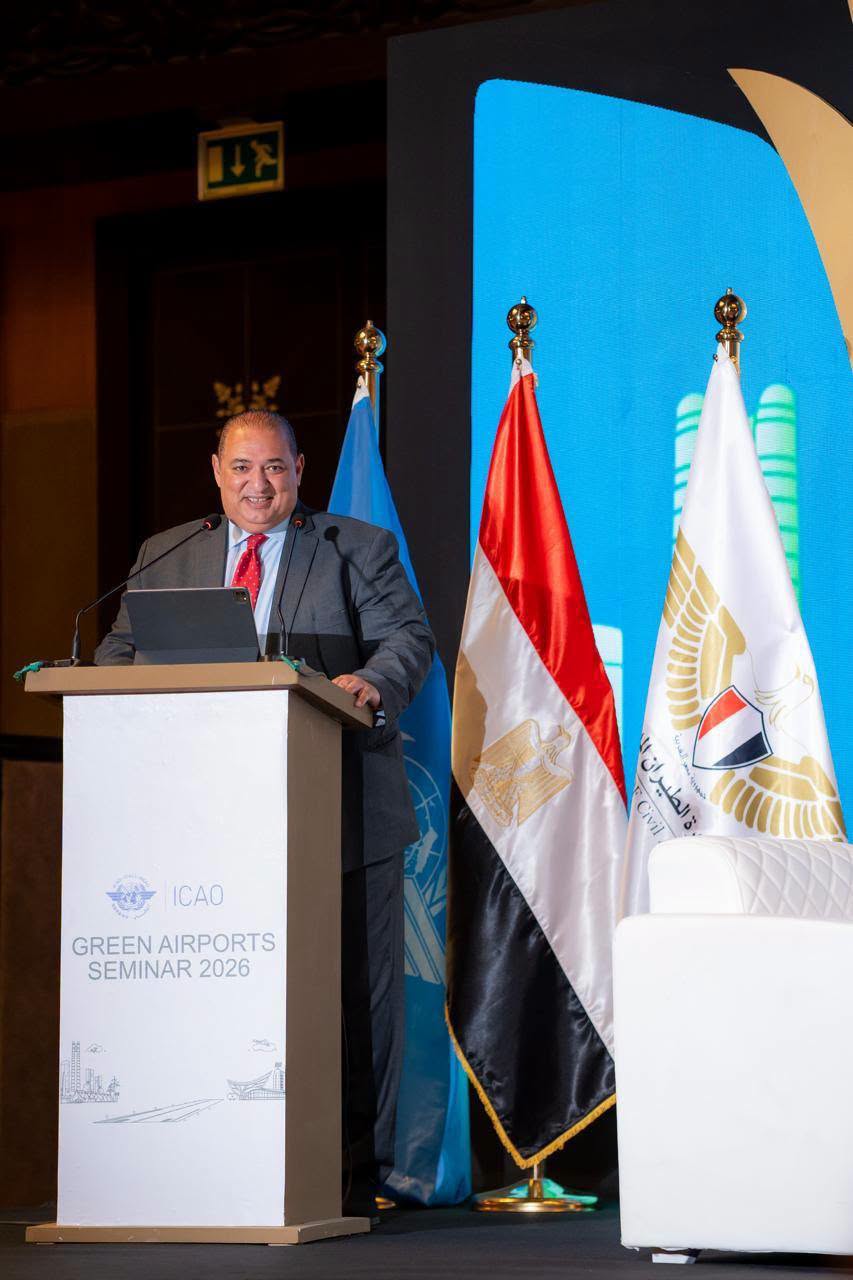
Speaking at the opening of the International Civil Aviation Organisation’s (ICAO) Green Airports Seminar 2026 in Cairo, Elhefny said the results reflected Egypt’s efforts to make sustainability a central pillar of airport development through energy efficiency, renewable power, and improved resource management.
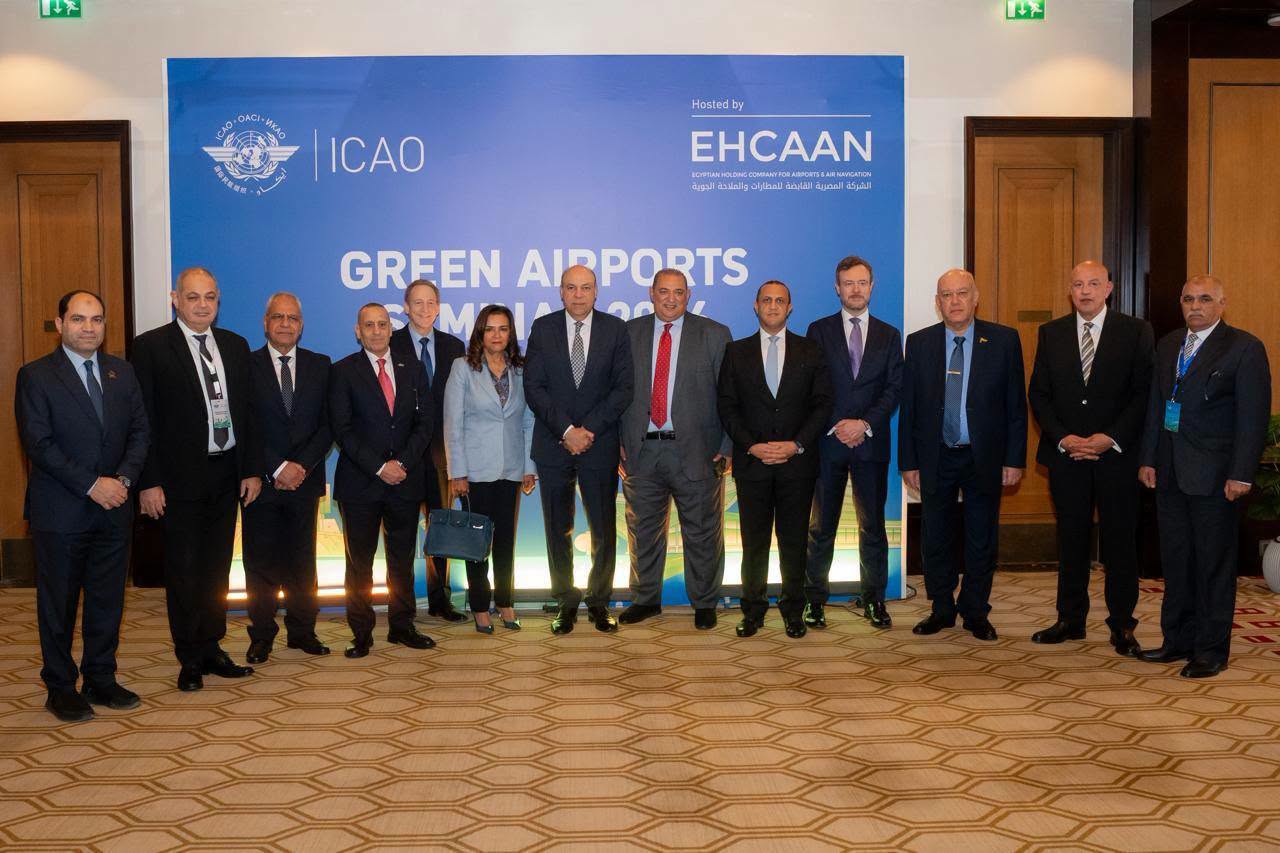
The two-day seminar, taking place on 29-30 October, brings together international and regional aviation officials, airport representatives, and industry experts to discuss ways to reduce airports’ environmental footprint and strengthen their resilience to climate change.
Elhefny said Cairo International Airport’s solar power capacity had reached around 4 megawatts, generating an estimated 6.4 million kilowatt-hours annually. The airport has also introduced smart building management systems, energy-efficient lighting, and digital solutions, alongside improvements in water and waste management.
Sustainability initiatives are also being extended to other Egyptian airports. The new passenger terminal at Borg El Arab International Airport includes a solar power system with a capacity of nearly 1.5 megawatts, as well as energy-saving measures and water treatment and reuse systems.
Hurghada International Airport, meanwhile, is participating in the Green Hurghada Initiative in cooperation with the Environment Ministry and the United Nations Industrial Development Organsation (UNIDO).
Elhefny said several Egyptian airports had received international recognition for their environmental initiatives. Cairo International Airport had received awards from Airports Council International (ACI), while Hurghada International Airport had received a Zero Waste Award and Alexandria International Airport had been recognised for its waste recycling and circular-economy initiatives.
Egypt advances sustainable aviation initiatives
Egypt is also participating in the ICAO-United Nations Environment Programme FIRE Project, supported by the Global Environment Facility, which aims to replace firefighting foams containing per- and polyfluoroalkyl substances (PFAS) with more environmentally friendly alternatives.
The project is being implemented at Cairo and Sharm El-Sheikh international airports, supporting environmental protection while maintaining aviation safety requirements, the minister said.
Egypt is also cooperating with ICAO and the European Union under the Assistance, Capacity-building and Training for Sustainable Aviation Fuels (ACT-SAF) Programme to develop sustainable aviation fuel (SAF), following the launch of a national feasibility study in Cairo in July.
The study is intended to identify technical and economic opportunities and requirements and help prepare a national policy and roadmap for future production and use.
Elhefny added that Egypt issued the second edition of its National Action Plan for Reducing International Aviation Carbon Dioxide Emissions in December 2025, in coordination with ICAO and relevant aviation-sector stakeholders.
The plan focuses on improving operational efficiency, ground-handling processes, and fuel consumption, while strengthening monitoring and evaluation through performance indicators.
He said achieving sustainability targets required moving beyond setting objectives towards implementing practical solutions supported by reliable data and measurable indicators. This would also require international cooperation, technology transfer, capacity building, and financing mechanisms, particularly to help developing countries expand the adoption of sustainable solutions.
Digitalisation central to airport modernisation
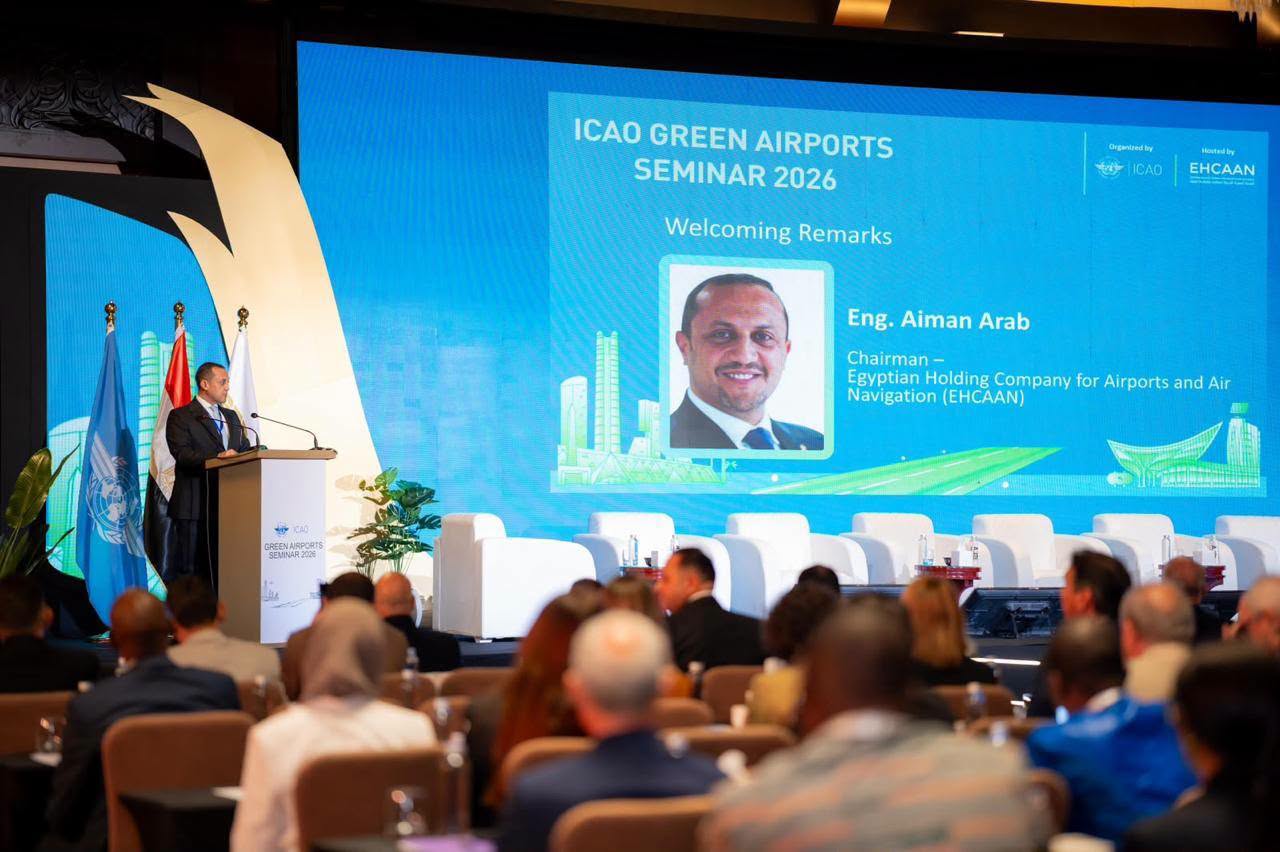
Aiman Arab, chairman of the Egyptian Holding Company for Airports and Air Navigation, said Egypt’s airports handled around 62 million passengers in 2025, including more than 31 million at Cairo International Airport.
He said rising air traffic required more efficient airport management and operating systems to accommodate passenger growth while limiting the environmental impact of operations.
Digitalisation measures include biometric gates, self-service baggage drop-off, and the elimination of paper departure cards for Egyptian citizens at Cairo International Airport. These initiatives are intended to simplify travel procedures, reduce paper consumption, and shorten waiting times.
Arab added that modernising radar and air navigation systems, alongside real-time data exchange between air traffic control, airports, airlines, and ground-service providers, could improve aircraft movement management, reduce waiting and ground-movement times, and consequently lower fuel consumption and emissions.
He said the planned Terminal 4 project at Cairo International Airport offered an opportunity to incorporate energy-efficiency and climate-adaptation requirements from the earliest design stages.
Arab also called for viable financing models and expanded private-sector partnerships to support airport infrastructure projects, with particular attention to smaller and regional airports.
ICAO calls for stronger international cooperation
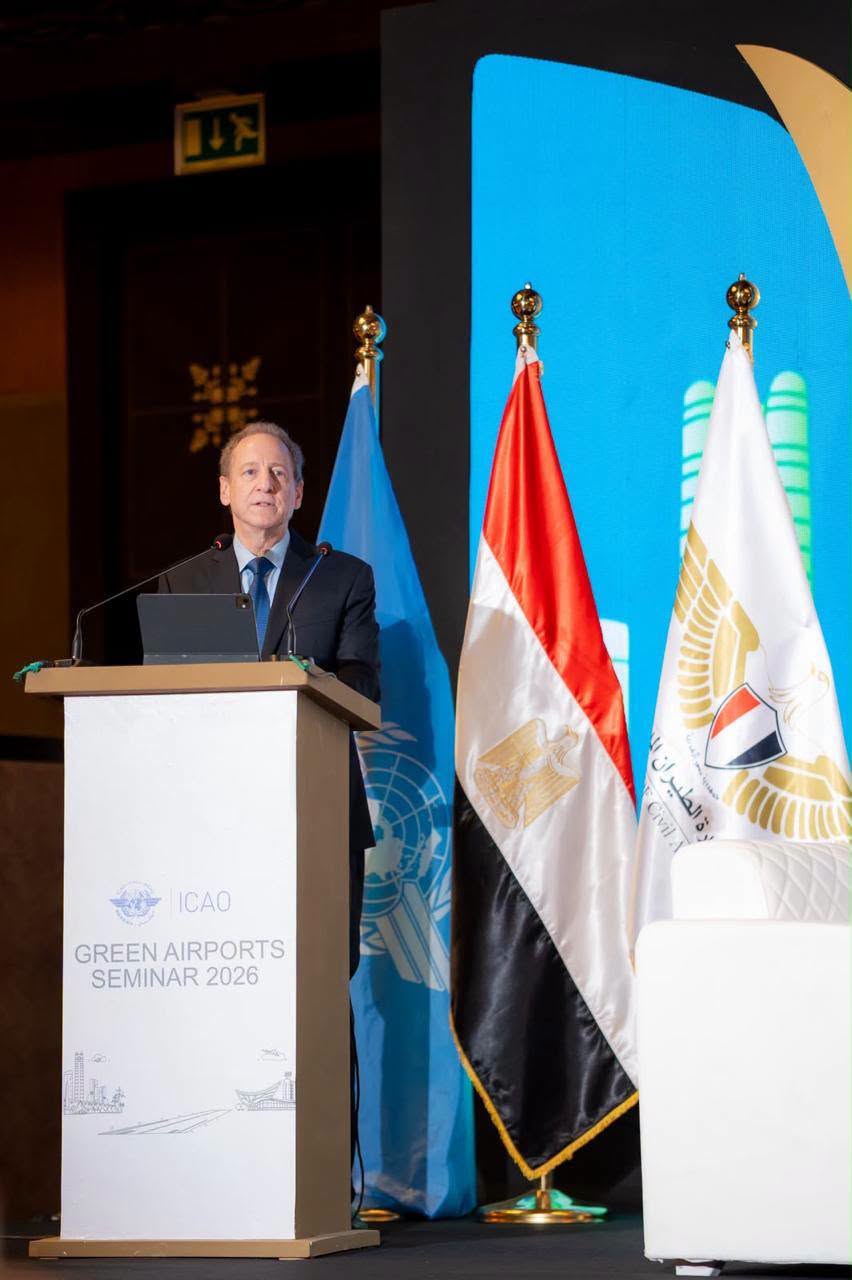
In a recorded address, ICAO Secretary-General Juan Carlos Salazar called for intensified international efforts to develop green, climate-resilient airports through greater use of clean energy, protection of critical infrastructure and improvements to airport operations.
Salazar thanked Egypt and the Egyptian Holding Company for Airports and Air Navigation for hosting the seminar, stressing the importance of cooperation among governments, airports, international organisations, and investors.
He said the efforts were aligned with ICAO’s Strategic Vision for 2050, which aims to make air transport accessible to all, achieve zero fatalities, and reach net-zero carbon emissions.
Salazar also highlighted the launch of the Finevest Hub, which connects green aviation projects with financing sources, as well as ICAO capacity-building programmes, including ACT-CORSIA, ACT-SAF, and ACT-LTAG.
Mohamed Rahma, ICAO’s regional director for the Middle East, said aviation sustainability extended beyond reducing carbon emissions to strengthening airports’ ability to withstand climate change and maintain operations during extreme weather events.
Rising temperatures, water scarcity, and changing weather patterns across the region made it essential to incorporate climate resilience into airport planning, design, and development, he said.
Justin Erbacci, director general of ACI World, said airports were key drivers of economic development through their contribution to trade, tourism, employment, and connectivity.
He said greener airport operations required more efficient energy use, wider adoption of renewable power, electrification of ground vehicles and equipment, improved water and waste management, noise reduction, and biodiversity protection.