

Dina Abdel Fattah says algorithm, not legacy, now defines corporate success in Egypt
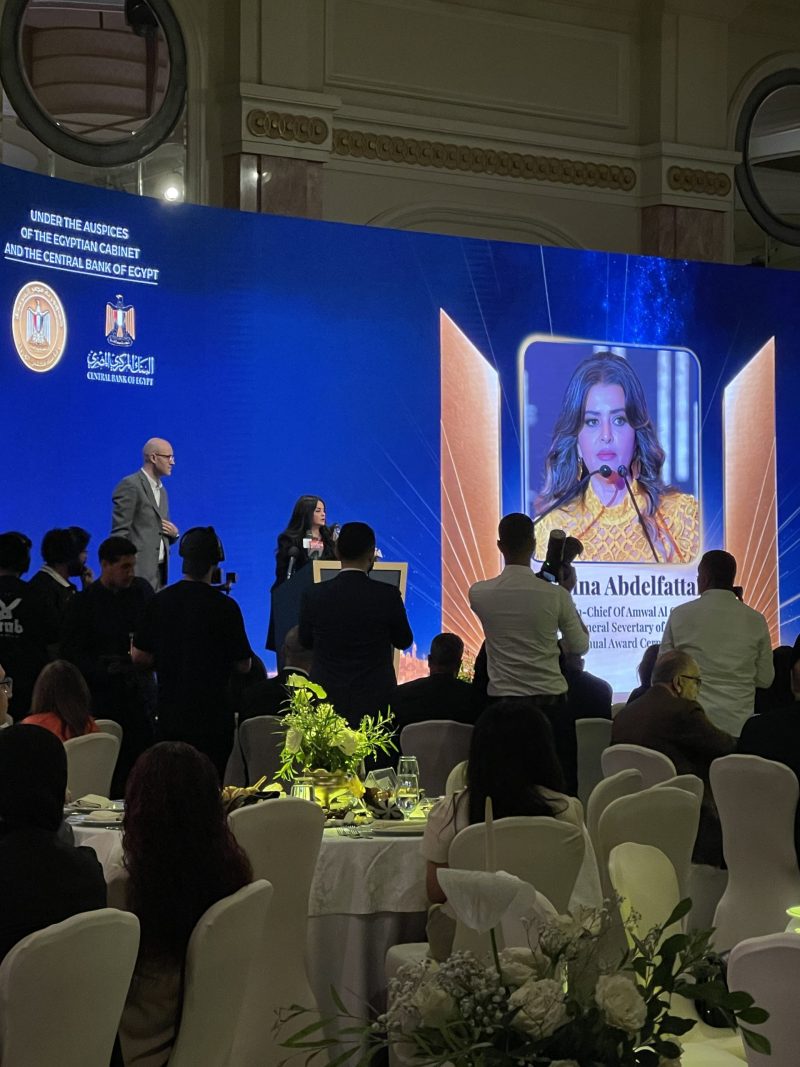
Companies in Egypt are navigating a rapidly changing economic landscape where relevance and adaptability matter more than legacy or historical profitability, Dina Abdel Fattah said on Monday.
Speaking at the opening of the 11th Amwal Al Ghad Awards Ceremony, she said the new rules of business success are increasingly being shaped by “the algorithm” rather than traditional measures of scale or past performance.
Abdel Fattah said the Egyptian economy is undergoing structural changes driven by digital transformation, shifting consumer behaviour and evolving market dynamics, forcing companies to rethink traditional business models.
“The equation of success has changed,” Abdel Fattah told attendees. “Today, success is no longer determined by a company’s history, legacy, size, or even profitability alone. It is increasingly shaped by the algorithm — by how relevant, agile and connected a company is in real time.”
She said businesses operating in Egypt are facing a new era where speed of adaptation and technological integration have become central to competitiveness, particularly as economic reforms and global market shifts continue to reshape the investment climate.
Abdel Fattah noted that in the past, established market players often relied on decades of accumulated reputation and financial strength to maintain their position, but the rise of data-driven economies has disrupted that model.
“Relevance is the new currency,” she said, adding that companies able to align quickly with consumer needs, technological trends and digital ecosystems are more likely to sustain growth.
Her remarks come as Egypt pushes forward with broader economic reforms aimed at enhancing private-sector participation, improving market efficiency and accelerating digitalisation across industries.
The Amwal Al Ghad Awards, now in its 11th edition, recognise leading companies, executives, and institutions for their performance and contribution to Egypt’s economic development.
Abdel Fattah said the transformation underway presents both challenges and opportunities for businesses, urging companies to embrace innovation and reposition themselves for a future increasingly defined by technology, data and market relevance.