

Egypt, Thailand sign 3 agreements to boost trade, investment ties
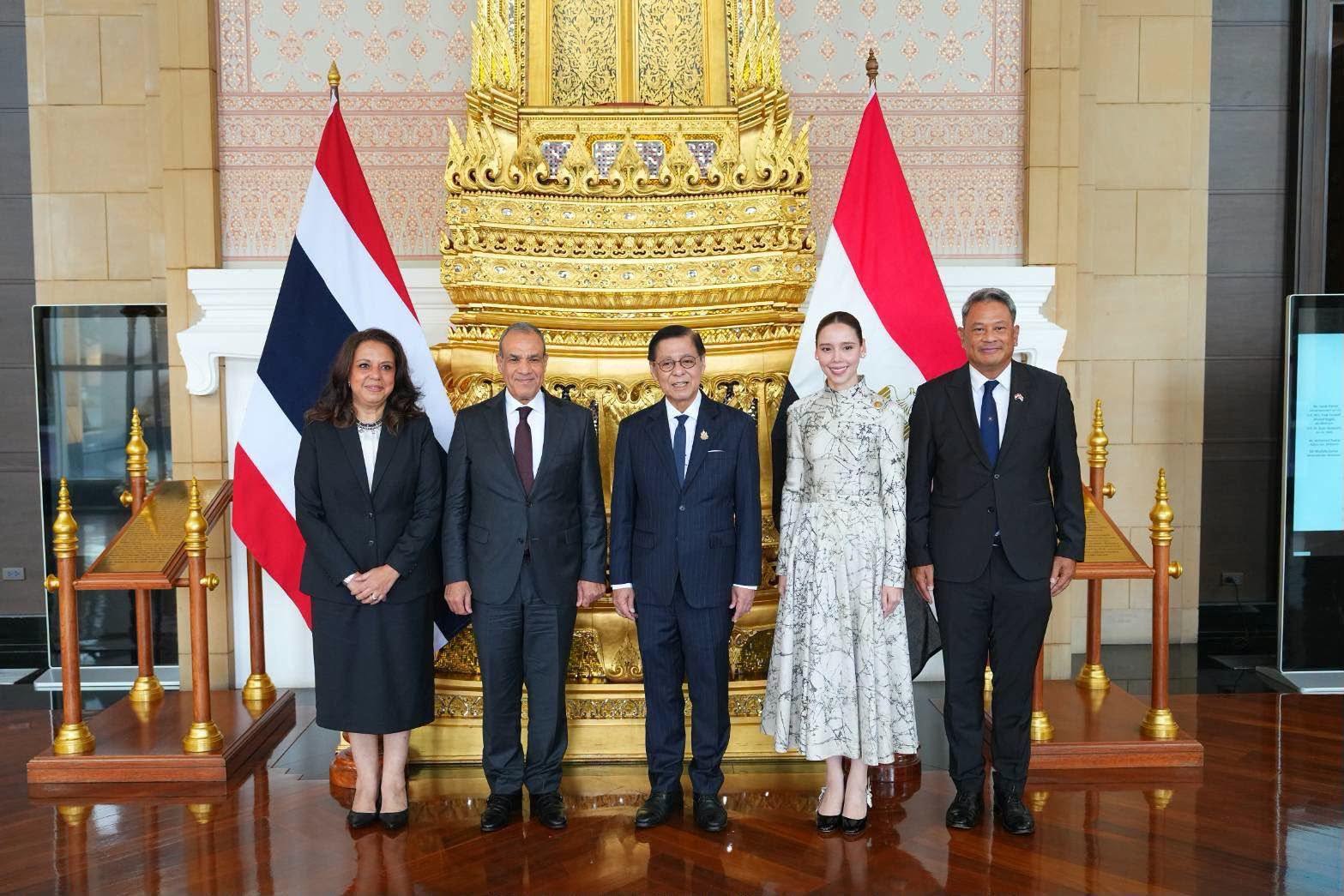
Egypt and Thailand signed three cooperation agreements on Thursday to strengthen bilateral ties and expand trade, investment, development, and cultural cooperation, following the third session of their joint ministerial committee in Bangkok, Egypt’s Foreign Ministry said.
The meeting was co-chaired by Egyptian Foreign Minister Badr Abdel-Atty and Thai Deputy Prime Minister and Foreign Minister Sihasak Phuangketkeow. It was the committee’s first session in 20 years, following its previous meeting in Cairo in 2006.
The agreements comprised a joint action plan for 2027-2029, a memorandum of understanding on cultural cooperation, and a memorandum between the Egyptian Agency of Partnership for Development and the Thailand International Cooperation Agency (TICA) on trilateral development cooperation.
The two sides also agreed to terminate their mutual visa-exemption agreement for holders of diplomatic, official, service, and special passports.
Abdel-Atty said Egypt sought to increase bilateral trade, diversify its structure, and facilitate Egyptian exports to Thailand. He also encouraged companies from both countries to explore joint investment opportunities.
He highlighted Egypt’s strategic location, infrastructure, and investment opportunities, particularly in the Suez Canal Economic Zone (SCZONE), which could serve as a platform for Thai companies seeking to expand into African, Arab, and European markets.
The minister also stressed the importance of activating the Egyptian-Thai Business Council and strengthening ties between the two countries’ business communities to translate cooperation into investment partnerships.
Abdel-Atty welcomed Thailand’s initiative to relaunch the Thailand-Africa Initiative, saying it could create opportunities for broader economic and development cooperation and strengthen Thailand’s engagement with Africa in line with the African Union’s Agenda 2063.
The two ministers also discussed regional and international developments, including the situation in the Middle East, energy security, and supply chains.
Abdel-Atty outlined Egypt’s efforts to support regional stability and advance implementation of US President Donald Trump’s comprehensive peace plan for Gaza. He stressed the need to fulfil the commitments of the first phase, including ensuring the unimpeded delivery of humanitarian aid to Gaza and advancing early recovery efforts.
He also called for intensified efforts to de-escalate regional tensions, prevent the conflict from spreading, and safeguard freedom of navigation in the Red Sea and the Strait of Hormuz.
The discussions also covered the Grand Ethiopian Renaissance Dam, Egypt’s water security and developments in the Horn of Africa and the Red Sea. Abdel-Atty described the Nile water issue as existential for Egypt and rejected unilateral measures in the Eastern Nile Basin that contravene international law.
The meeting reflected growing momentum in bilateral relations and a shared commitment to expanding cooperation across political, economic, development, and cultural fields.
Abdel-Atty also welcomed Thai Princess Sirivannavari’s participation in the opening ceremony of the Grand Egyptian Museum, describing it as a reflection of the cultural and people-to-people ties between the two countries.
He further welcomed the outcome of the eighth round of political consultations, held in Cairo in June 2026, and expressed hope that the ninth round would take place in Thailand.