

Egypt’s Farid details investment reform push during London visit
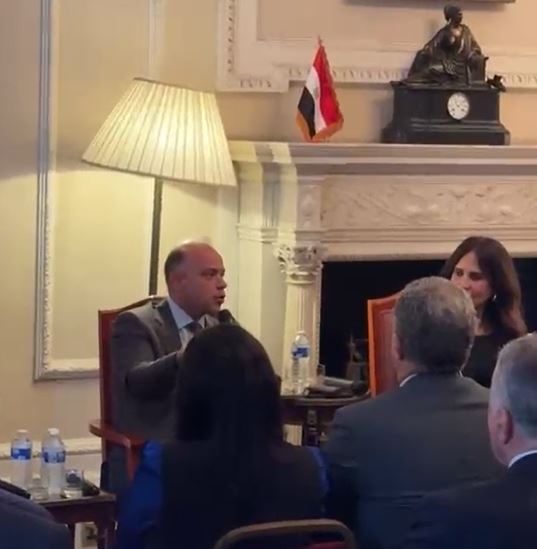
Egypt is pursuing reforms to simplify investment procedures, reduce bureaucracy, and strengthen its industrial base as part of efforts to attract investment and boost exports, Investment and Foreign Trade Minister Mohamed Farid said on Wednesday.
Speaking during the British Egyptian Business Association’s (BEBA) 2026 Business Mission to the United Kingdom, Farid said achieving Egypt’s export targets required deeper industrial development and closer coordination between government ministries responsible for industry, trade, finance, and investment.
“If we want to deepen and expand our exports to the $100 billion mark, how can we achieve this if we don’t have a sufficiently deep industrial base to export these products?” he said.
“So, we need to focus on deepening our industrial base in collaboration with the Ministry of Industry, and that’s why we get to decide which industries, how can we deepen the industrial base, localise some of the products in that area, and actually further expand exporting processes.”
The minister said digitisation was a key part of the government’s reform agenda, arguing that many constraints facing businesses stem from administrative and procedural inefficiencies rather than macroeconomic policy.
He said investors continue to face challenges ranging from shareholder agreements and capital increases to banking procedures and cross-border fund transfers, noting that these issues directly impact business operations.
“You have to believe us, on the one hand, that we’re trying to do the right thing and to support us in doing this,” he said, adding that investment decisions ultimately depend on confidence and sentiment. “We are going in the right direction, and we will take whatever it takes to do these reforms.”
Farid said the government plans to create a centralised platform providing investors with access to land parcels and investment opportunities, while leaving feasibility studies to the private sector.
He said ease of doing business remained a priority, noting that administrative processes such as capital increases, mergers and acquisitions, and company registration can create significant delays.
Farid also pointed to capacity constraints within regulatory bodies, noting that a limited number of officials handle merger and acquisition procedures for hundreds of thousands of companies.
He said the government’s long-term goal was to remove the need for investors to rely on personal connections to resolve routine issues.
“I would want problems to be resolved naturally through the normal processes,” he said. “You don’t have to have a special connection with deputy ministers, chairmen of authorities, or ministers to be able to resolve your issues and your problems, and for this to be done, it has to be through digitisation.”
According to Farid, digitisation is a “crucial factor” and the most effective path toward that goal.
He described current corporate procedures, including capital increases, as overly complex and involving multiple agencies and extensive documentation.
“This is a process that I believe is very oppressive and unfair to investors,” he said.
Farid said reforming the investment climate was an ongoing process rather than a one-off effort.
“There isn’t an endpoint or an endgame,” he said. “The journey is a continuous journey. You have to … continue reforming the process,” the minister said. “For us, it’s all about incremental reforms that are building upon each other until you reach the point that the entire investment environment is improving.”
Attribution: Amwal Al Ghad English