
Egypt urges WTO reform, fairer market access for exports
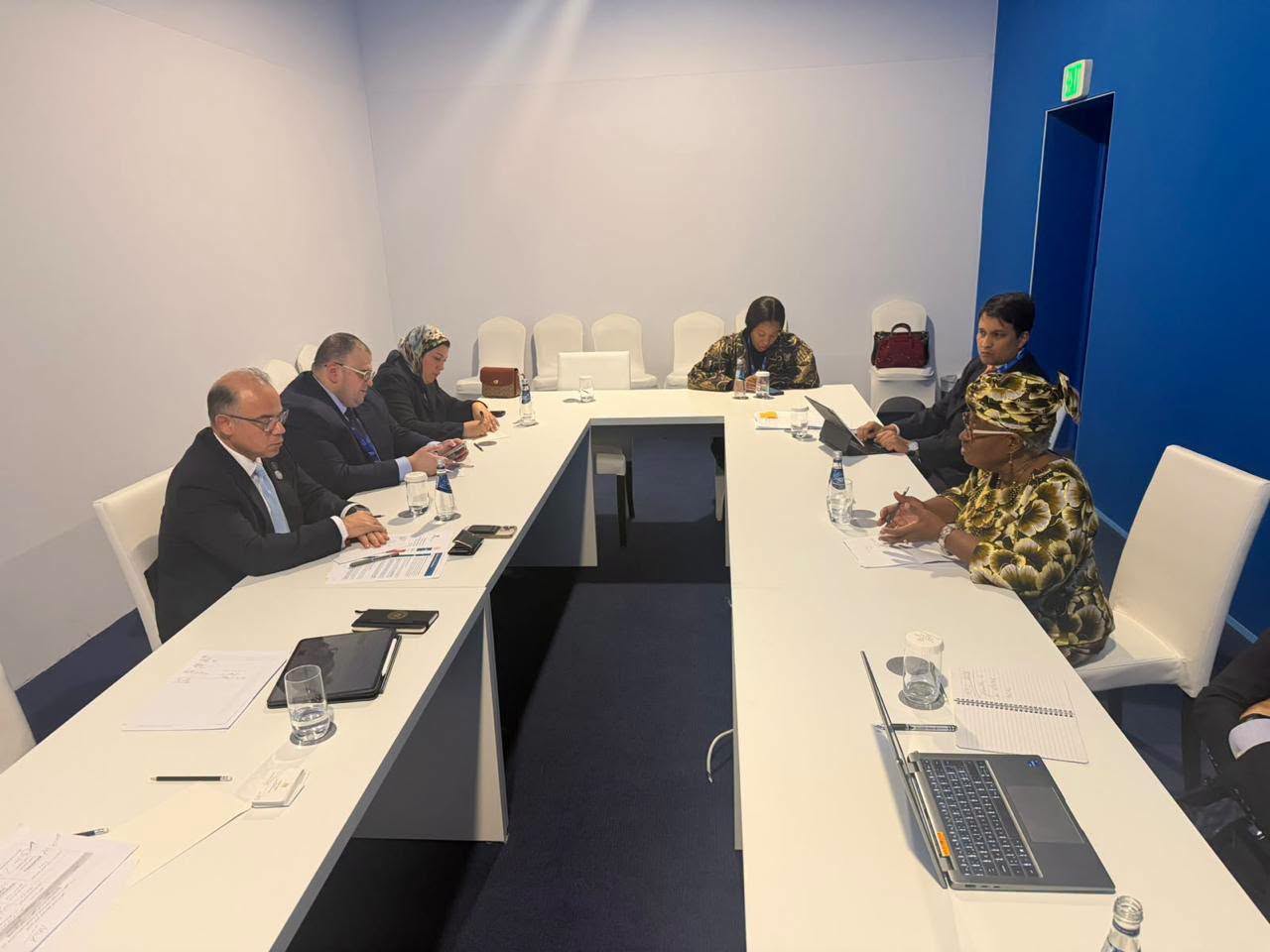
Egypt’s Investment Minister Mohamed Farid met World Trade Organisation (WTO) Director-General Ngozi Okonjo-Iweala in Doha to discuss reforming the global trading system, curbing rising protectionism, and improving access for Egyptian exports to international markets, the ministry said on Tuesday.
The meeting took place on the sidelines of the 2026 World Investment Forum, held in the Qatari capital from 25-27 Oct., with Mohamed Awad, chief executive of Egypt’s General Authority for Investment and Free Zones (GAFI), also in attendance.
Farid said rising trade restrictions and geopolitical instability were disrupting global commerce and limiting exporters’ access to major markets. He stressed that trade measures should take into account the circumstances of emerging and developing economies.
He added that measures targeting excess production capacity in some countries could also affect developing economies with relatively small shares of importing markets, despite differences in production conditions and competitiveness.
Egyptian farmers, fishers, and manufacturers should have fair access to international markets that reflects differences in production conditions, Farid said. High energy and production costs, coupled with intense international competition, made it important to avoid imposing additional burdens on emerging industries, he added.
On WTO reform, Farid called for restoring the effectiveness of the organisation’s dispute settlement system and establishing clear, enforceable mechanisms to protect members’ rights amid an increase in unilateral trade measures.
Okonjo-Iweala outlined alternatives available while the WTO’s Appellate Body remains non-functional, including the Multi-Party Interim Appeal Arbitration Arrangement (MPIA), as well as consultations, mediation, and dispute-resolution procedures through the organisation’s committees, the ministry said. The MPIA provides an alternative appeal mechanism for participating WTO members.
The talks also covered the impact of the European Union’s Carbon Border Adjustment Mechanism (CBAM) on exports from developing countries.
Farid outlined Egypt’s experience in establishing a regulated voluntary carbon market, with rules governing project oversight, verification of emissions reductions and the issuance of carbon certificates under technical and regulatory requirements.
He said Egypt’s domestic emissions-reduction efforts should be considered in discussions on European carbon regulations.
The two sides also discussed assessing equivalence between carbon-market systems, recognising national emissions-reduction efforts and limiting fragmented standards and regulatory costs for exporters, the ministry said.
Okonjo-Iweala highlighted the challenges that multiple environmental standards pose for businesses and international trade, as well as the importance of exploring common frameworks to improve comparability and interoperability between different systems.
Farid said developing countries should remain actively involved in WTO negotiations and ongoing reforms to ensure their development needs are considered and preserve the organisation’s role in supporting a rules-based multilateral trading system.
The meeting concluded with an agreement to continue dialogue on priority trade issues, including measures affecting exports, reform of the dispute settlement system and environmental requirements linked to international commerce, the ministry said.